

Known for its business-friendly tax framework, the United Arab Emirates has long maintained its reputation as a premier global business destination supported by strong infrastructure and a historically tax-free corporate tax regime. With the introduction of corporate tax in the UAE in June 2023, the country entered a new phase of regulatory compliance aligned with global tax practices.
This guide will break down everything a new business must know about corporate tax in the UAE, corporate tax registration, filings, compliance obligation and how top corporate tax consultants in the UAE help in complying with corporate tax regulations in the UAE.
What is corporate tax in the UAE?
Corporate tax in the UAE is a federal tax imposed on the net profits earned by businesses or legal entities operating in the UAE. It is known as corporate income tax or business profit tax. It applies uniformly across the UAE and the regulatory authority in the Federal Tax Authority.
Introduced in 2023, the UAE corporate tax framework applies to UAE mainland companies, free zone entities, and foreign businesses carrying out business activities, except for entities engaged in natural resource extraction, which remain subject to emirate-level taxation.
UAE corporate tax rates
The UAE corporate tax regime follows a two-tier rate system:
- 0% corporate tax on taxable income up to AED 375,000
- 9% corporate tax on taxable income exceeding AED 375,000
Additionally:
- Qualifying Free Zone Persons may continue to benefit from 0% tax on qualifying income
- Large Multinational Enterprises (MNEs) with global revenues above €750 million are subject to a 15% Domestic Minimum Top-up Tax (DMTT) from 1 January 2025
- Small Business Relief is available until 31 December 2026 for businesses with revenues up to AED 3 million.
Who Is Liable to Pay Corporate Tax in the UAE?
The UAE corporate tax law defines a taxable person as any individual or entity carrying out business activities within the UAE:
-
Resident taxable persons, including UAE-registered entities, foreign companies with management and control in the UAE, and individuals whose business income exceeds AED 1 million annually.
-
Non-resident persons:
- Entities with a Permanent Establishment (PE) in the UAE.
- Non-residents earning UAE-sourced income.
- Juridical persons with a nexus in the UAE create a taxable presence even without physical establishment.
How Corporate Tax Is Calculated in the UAE
Corporate tax calculation in the UAE follows a defined and systematic process:
- Start by calculating the total gross income from business activities.
- Subtract deductible expenses, such as payroll costs, office expenses, marketing spend, finance costs, and depreciation.
The resulting figure represents taxable profit. - Apply the UAE corporate tax rate: 0% tax rate on profits up to AED 375,000 and 9% on income above this threshold.
Maintaining IFRS-compliant accounting records is mandatory for accurate corporate tax reporting in the UAE.
Which Businesses and Incomes Are Exempt Under UAE Corporate Tax?
Under UAE corporate tax regulations, certain entities and types of income are fully or partially exempt from taxation. These exemptions include:
-
Automatic Exemptions
- Government entities
- Government-controlled organizations
-
Exemptions Announced by the Ministry of Finance
- Oil, gas, and other extractive industries
- Non-extractive natural resource businesses
-
Cabinet-Recognized Exemptions
- Qualifying public benefit organizations
-
FTA-Approved Conditional Exemptions
- Public and private pension funds
- Social security funds
- Qualifying investment funds
- Fully owned UAE subsidiaries of government or government-controlled entities
5. Small Business Relief (SBR)
To support small and medium-sized enterprises (SMEs), the UAE provides Small Business Relief under the UAE corporate tax :
- 0% corporate tax for businesses with annual revenue up to AED 3 million (valid until 31 Dec 2026)
- Applicable to resident persons in the mainland or free zones
- Excludes holding companies and financial institutions
- Requires the election of SBR on the corporate tax return to be submitted
Startups and SMEs can utilize this relief to reduce their tax liabilities, streamline compliance, and focus on business growth while adhering to UAE corporate tax regulations.
UAE FTA Penalties for Corporate Tax Violations
Non-compliance with UAE corporate tax rules can trigger fines, including:
- AED 10,000 for missed registration deadlines
- Escalating penalties for late return filing or payments
- Fines for inaccuracies in submitted tax returns
- Lesser penalties for voluntary error reporting
Latest Filing and Payment Rules for UAE Corporate Tax
Under the current UAE corporate tax regime, taxable persons must complete both filing and payment obligations:
- Deadline: File the corporate tax return and pay the tax due within 9 months following the end of the tax period. Example: For a fiscal year ending December 31, 2025, the filing and payment deadline is September 30, 2026.
UAE corporate tax compliance requirement
To stay aligned with the UAE corporate tax regulation, businesses must adhere to the following:
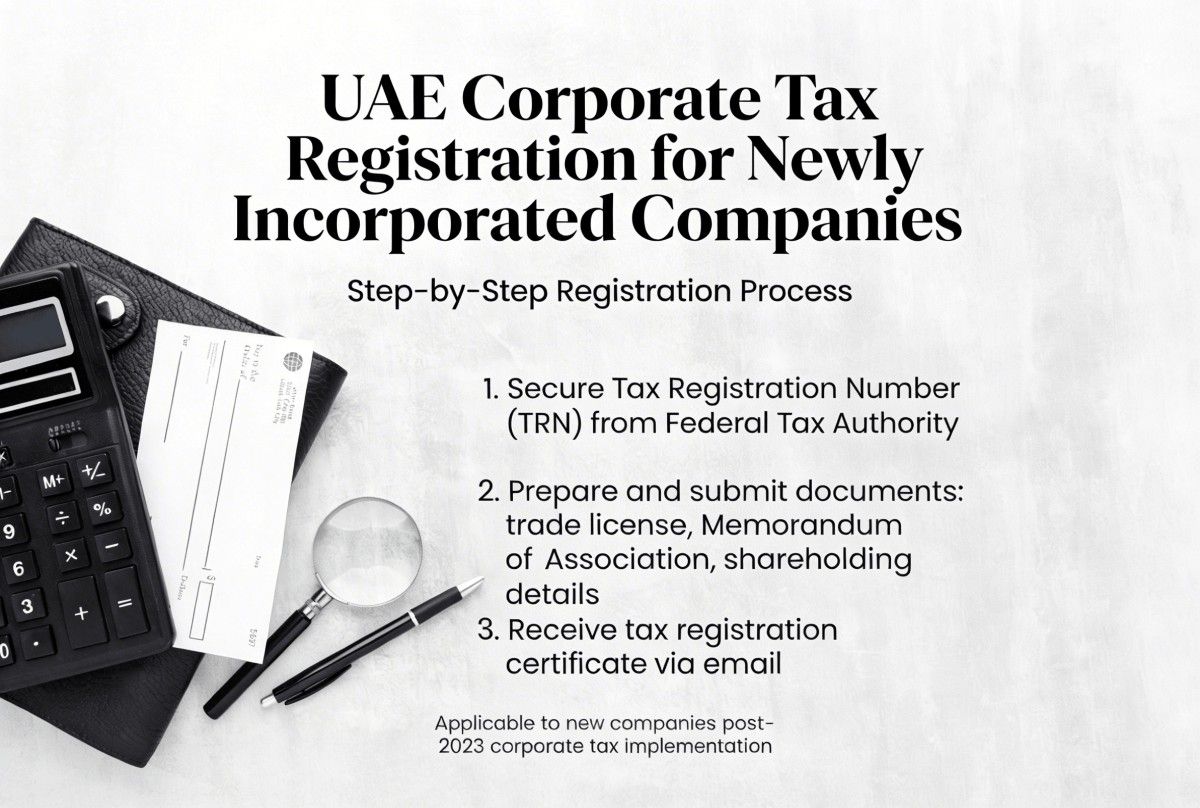
- Timely UAE Corporate tax registration: Register for Corporate tax in the UAE within the prescribed deadline specified by the UAE FTA decision.
- UAE Corporate tax filing returns: Submit corporate tax returns and settle any due payments in the UAE within nine months from the end of the fiscal period.
- Transfer Pricing disclosure: Adhere to UAE transfer pricing policies for related-party transactions or payments made to the connected person, and file alongside the UAE corporate tax return if the thresholds are met.
- Maintaining documents: Prepare and maintain corporate tax records and transfer pricing documentations including local files and master files, and submit them to FTA within 30 days of request.
- Audit readiness: Businesses must maintain all tax records and relevant documentation for seven years after the end of the tax period.
Any non-compliance will result in administrative penalties from the UAE FTA.
The Best Corporate Tax Services in the UAE
Navigating corporate tax compliance is challenging. So, adapting to the evolving corporate tax framework requires precision, timely compliance, and expert guidance. Jaxa Chartered Accountants, a leading auditing and accounting firm across the UAE and Dubai, as well as an FTA tax registered agent in the UAE, helps diverse clients to deliver end-to-end tax and compliance solutions to guide businesses to function seamlessly in 2026 and beyond, including:
- UAE corporate tax registration and compliance
- Audit and assurance services in the UAE
- UAE VAT and corporate tax return filing
- Assistance from certified chartered accountants and FTA-registered tax agents in the UAE
- Accounting and Bookkeeping Services
- UAE Corporate tax deregistration.
- Corporate tax advisory and consultation services in the UAE
With Jaxa’s top corporate tax consultants in the UAE, your business benefits from accurate registration, timely UAE corporate tax filing, mitigating tax exposure, and maintaining long term regulatory confidence.
Engage with Jaxa Auditors to stay compliant, protected, and growth-ready in the UAE in 2026 or beyond.
Book a FREE consultation today.



 Reach us on WhatsApp