
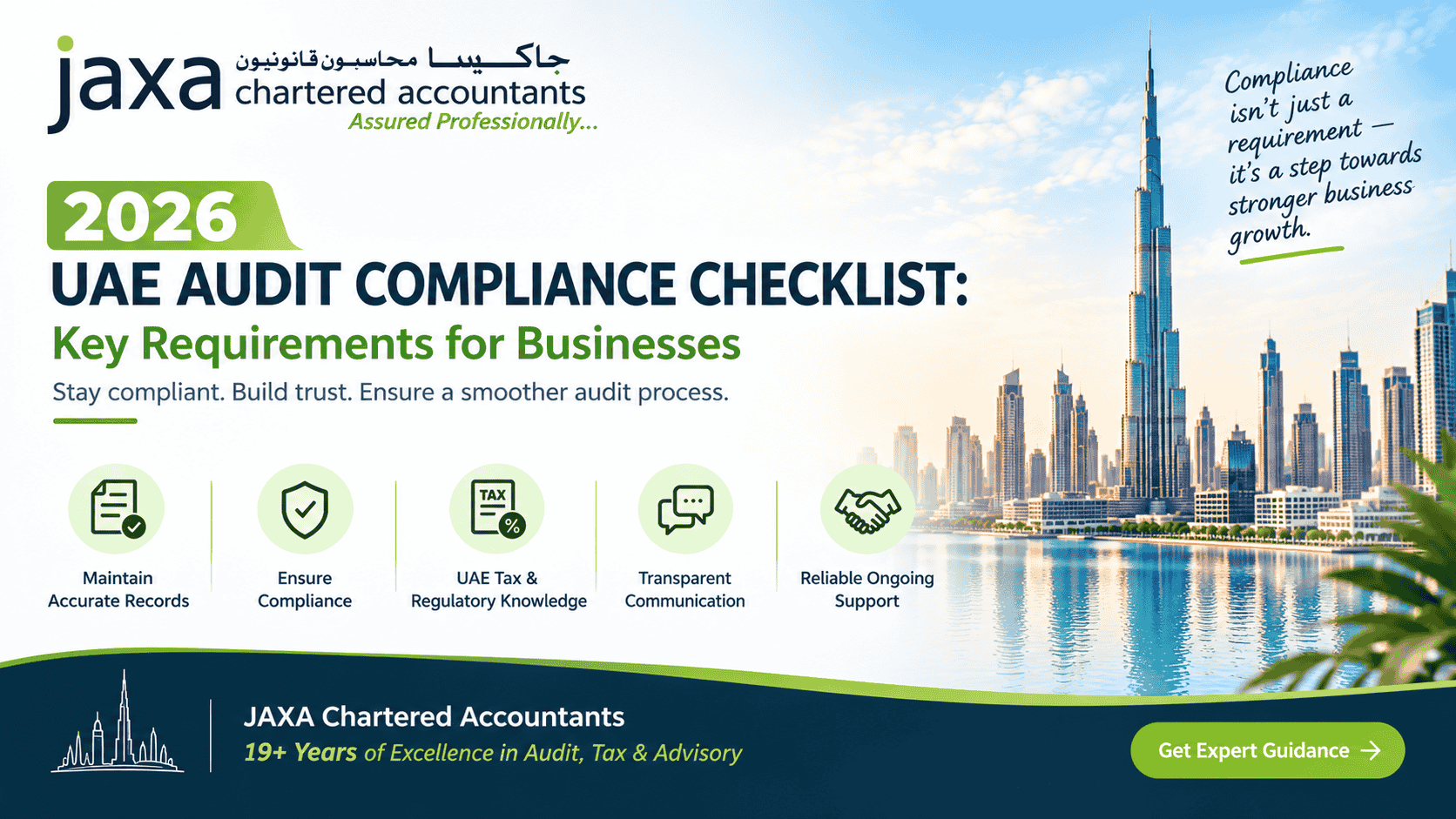

With the 2026 financial year-end approaching, businesses in the UAE should start preparing for their annual audit. Reviewing financial records, reconciling accounts, and organizing supporting documentation can help businesses complete the UAE audit process efficiently and meet compliance requirements with greater confidence.
An annual audit in the UAE is more than a statutory compliance requirement. It strengthens financial credibility and provides greater confidence for stakeholders in the company’s financial position while supporting transparency and sound financial management.
With UAE Corporate tax now integrated into the UAE compliance framework, businesses should take a proactive approach to their 2026 audit preparation, ensuring effective preparation for a smooth and efficient 2026 audit process.
This article covers the essential steps of the UAE audit process, including audit requirements, document preparation, internal control reviews, and compliance deadlines, while explaining how professional auditing services in the UAE can support businesses throughout the process.
What is the Annual Audit in the UAE?
An annual audit is a systematic and independent examination of a business’s financial statements, accounting records, and supporting documentation. It is designed to provide assurance that the financial statements are accurate and prepared in accordance with relevant UAE or Free Zone accounting and reporting requirements.
A qualified auditor in the UAE reviews financial transactions, account balances, documentation, and key internal controls as part of the audit process. Based on the audit evidence, the auditor forms an independent conclusion and issues an audit report.
So businesses must engage experienced auditing services in the UAE to examine the necessary records and supporting evidence before issuing an independent audit report in accordance with the applicable auditing and financial reporting standards.
Who needs an Annual Audit in the UAE?
An annual audit is more than a year-end compliance exercise. It provides an independent review of a company’s financial records, strengthens financial transparency, and helps businesses meet the requirements applicable to their legal structure and jurisdiction.
Understanding these requirements helps businesses remain in compliance and avoid potential financial or regulatory challenges.
Audit requirements in the UAE vary based on the type of entity, its jurisdiction, business activity, and applicable regulatory framework.
- Mainland Companies: Depending on the entity type and applicable laws, businesses may be required to appoint a licensed auditor and prepare audited financial statements. This commonly applies to entities such as limited liability companies and joint stock companies subject to the relevant requirements.
- Free zone companies: Free zone companies must follow audit and financial reporting requirements established by their respective free zone authority. Some free zone jurisdictions such as DMCC, DIFC, ADGM, Meydan, IFZA require all registered companies to prepare audited financial statements, while others set thresholds based on the revenue threshold.
- Qualifying Free Zone Persons (QFZPs): Qualifying Free Zone Persons (QFZPs) are required to prepare and maintain audited financial statements under the UAE corporate tax framework. Meeting this requirement is one of the conditions for maintaining QFZP status and benefiting from the 0% Corporate tax rate on Qualifying Income.
- Businesses with revenue of AED 50 million must comply with the applicable requirement to prepare and maintain audited financial statements. Ensuring these statements are accurate and properly documented can help businesses meet their UAE corporate tax compliance obligations and remain prepared for regulatory review.
Top reason to conduct an Annual Audit in the UAE
Accurate financial statements form the foundation of reliable financial reporting.
An annual audit in the UAE provides an independent review of these records and helps businesses evaluate the accuracy, completeness, and reliability of their financial statements.
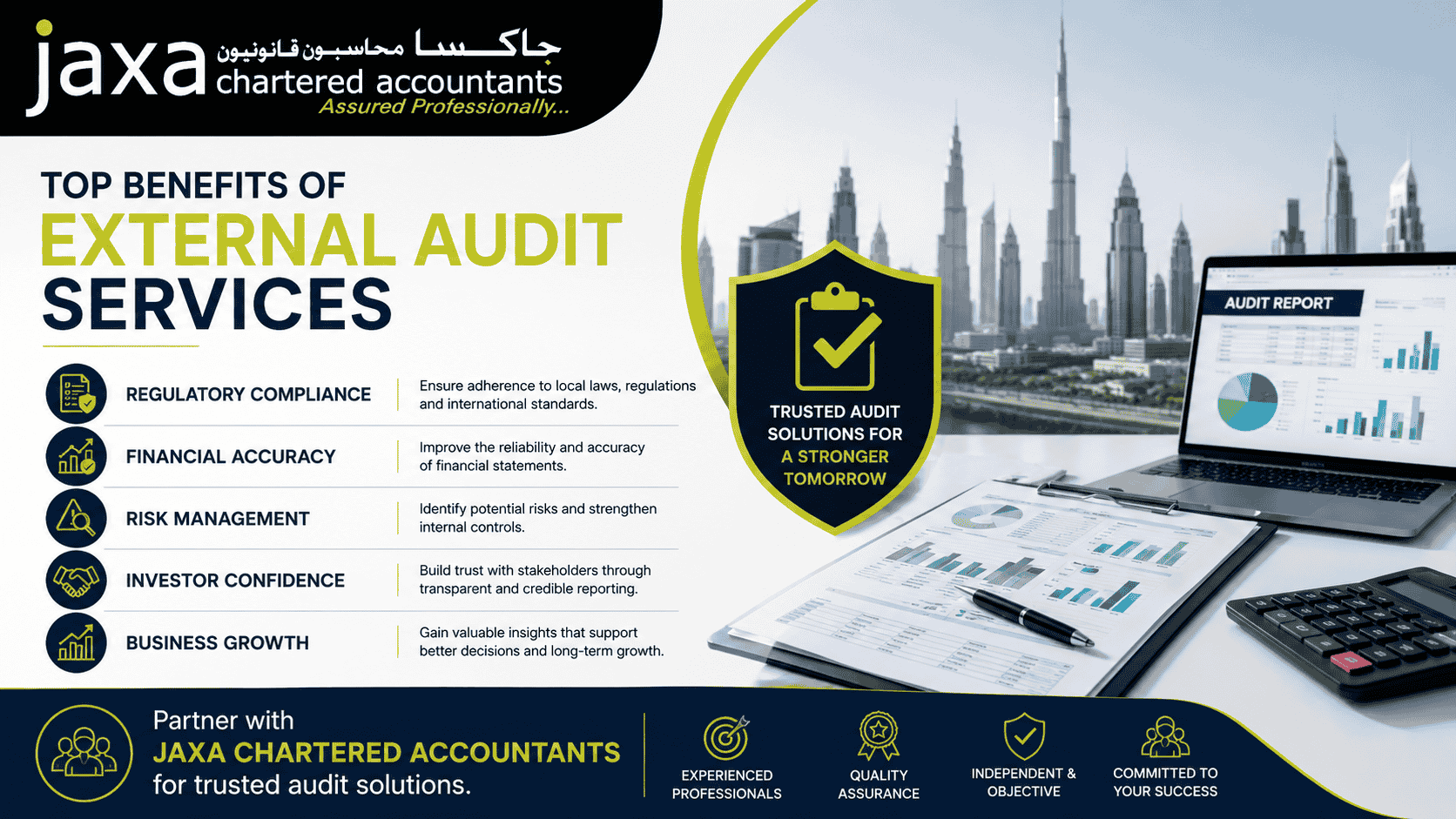
From regulatory compliance to risk management and financial transparency, there are several reasons why businesses may benefit from conducting an annual audit in the UAE.
- Compliance with UAE regulatory requirements: A statutory audit in the UAE provides an independent review of a company’s financial reporting and helps assess compliance with applicable requirements. As audit obligations vary by jurisdiction, entity type, and business activity, choosing the right auditing services in the UAE can provide guidance based on specific requirements applicable to each business.
- Promoting financial accountability: An independent audit enhances the credibility and reliability of a company’s financial information. Accurate and well-documented financial statements provide stakeholders with a reliable view of the company’s financial position and performance. It supports effective decision-making and reinforces trust and confidence in a company’s financial management.
- Detecting financial irregularities: Through an independent examination of financial records, transactions, and internal controls, an audit can highlight potential weaknesses and indicators of financial irregularities. While addressing identified risks and improving internal control procedures, businesses can strengthen financial governance and enhance overall risk management.
- Reducing compliance and financial risks: Inaccurate financial records, incomplete documentation, or missed filing deadlines may expose businesses to penalties or compliance risks. Regular audits can help identify reporting issues and weaknesses at an early stage, enabling businesses to take corrective measures and strengthen the overall compliance framework.
Working with experienced auditing services in the UAE helps businesses maintain accurate records and meet applicable regulatory requirements.
Annual Audit Preparation in the UAE: Step-by-Step Procedures
- Choose the right auditor in advance: Early appointment of a qualified auditor allows businesses to plan effectively, prepare the necessary documentation, identify potential risks, and complete the audit without last-minute delays.
Before appointing an auditor in the UAE, verify they hold a professional license and are eligible to undertake the audit under the applicable UAE regulations and requirements of the relevant authority. Entities operating in JAFZA, DMCC, DAFZA, IFZA and other regulated jurisdictions should verify any specific auditor registration or eligibility requirements applicable to their entity.
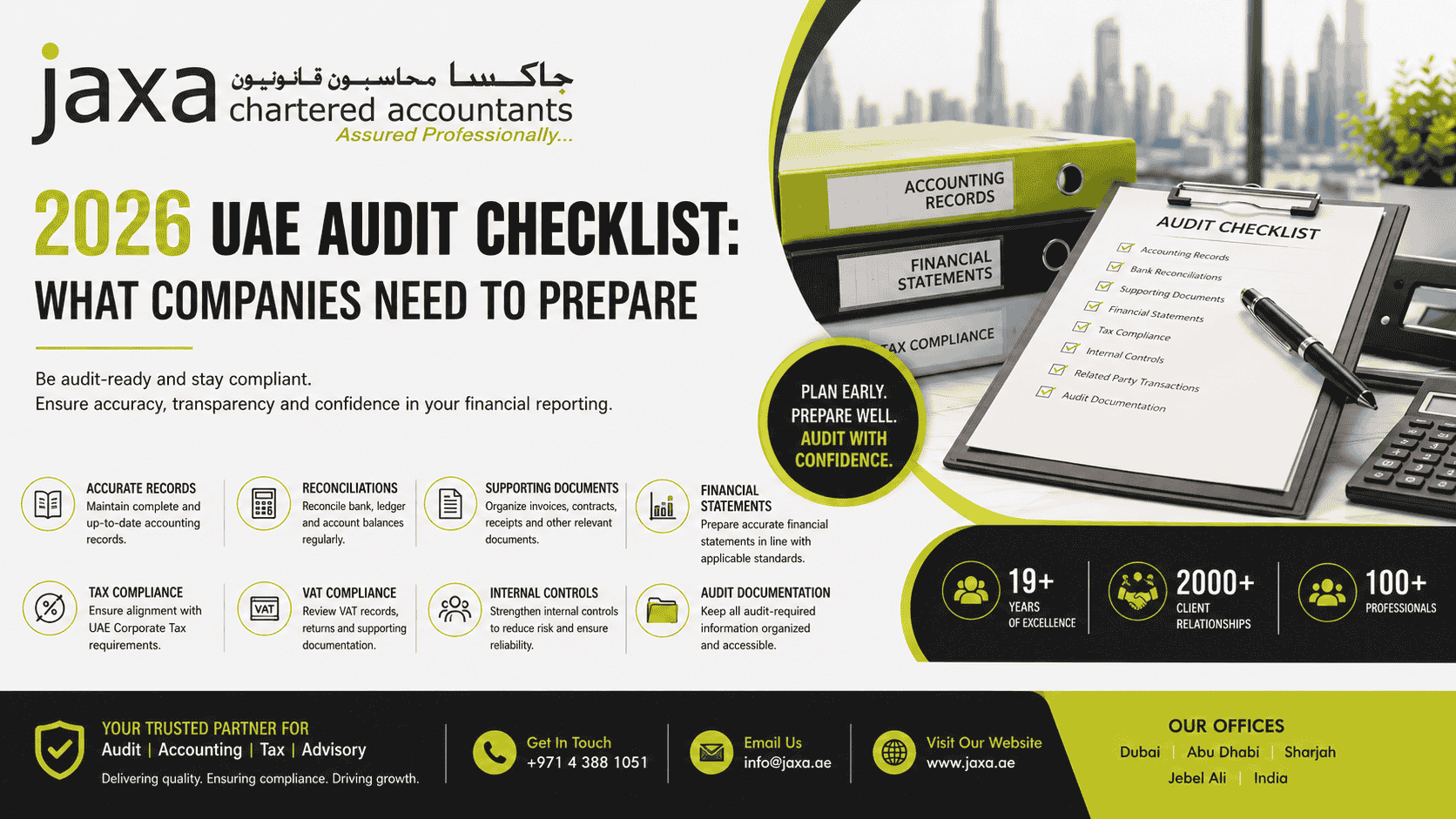
- Prepare and organize your audit documents: Maintaining complete and systematically organized accounting records helps facilitate an efficient statutory audit. The documents requested may vary depending on the company’s activities, transactions, and reporting requirements, but the main documents include:
- Valid trade license
- Memorandum and Article of Association
- Bank statement for the financial year
- Shareholder and director records
- Trial balance, general ledger, and prior-year financial statements
- UAE VAT registration details and VAT return records
- UAE Corporate tax registration and relevant tax filings
- Fixed asset register and depreciation schedules
- Payroll records
- Lease agreements, financial documents and related-party or intercompany agreements
Documentation requirements vary according to the company’s activities, financial transactions, and applicable reporting framework. Maintaining audit-ready records throughout the financial year helps facilitate a smoother audit process, supports timely reporting, and reduces the likelihood of documentation-related delays.
- Complete the year-end closing process: Ensure all accounting entries are recorded, and key financial records are reconciled before the audit commences. Bank reconciliation, accruals, prepayments, depreciation, fixed asset records, and other year-end adjustments should be reviewed and properly reflected in the trial balance.
Accurate and finalized accounting records give auditors a reliable set of financial records to examine and help reduce follow-up queries and potential delays.
- Strengthen UAE VAT and Corporate tax compliance: Before the audit, ensure you reconcile VAT returns with their accounting records and verify that all tax invoices and supporting documentation are complete. For maintaining UAE corporate tax compliance, verify that the Tax Registration Number and relevant filings are accurate and consistent with the company’s financial statements. The business should review related-party transactions and transfer pricing requirements.
- Organize your Audit documentation: Maintain financial records and supporting documents in a structured format covering balance sheet and profit and loss statements. Ensure to keep reconciliation, transaction records, and key explanations for significant transactions are readily available. Proper audit documentation helps auditors streamline audit procedures and support an efficient annual audit in the UAE.
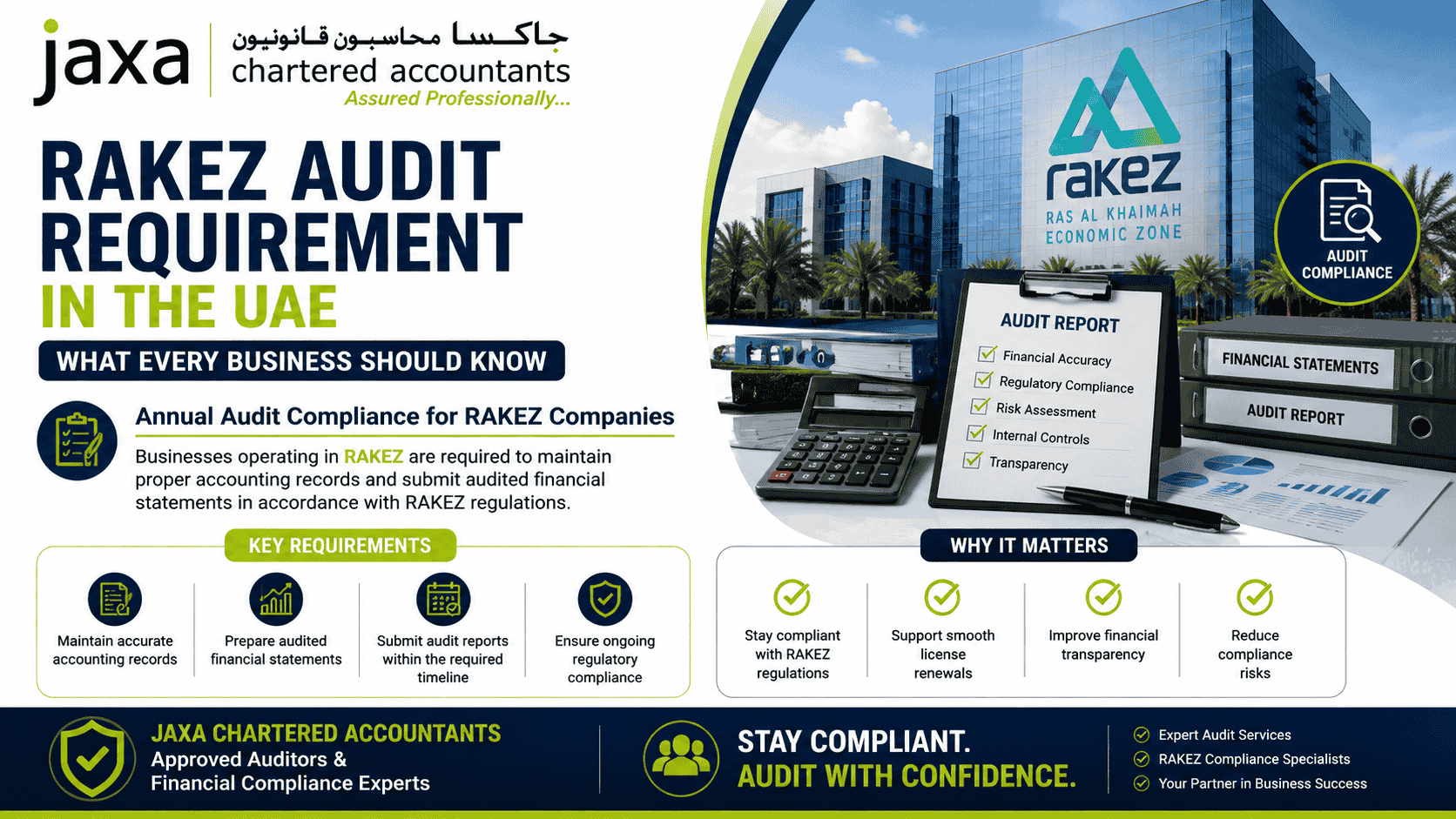
Jaxa Chartered Accountant is a leading auditing and accounting firm in the UAE, providing professional audit services to businesses across various jurisdictions. With experienced professionals and a commitment to accuracy, transparency, and integrity, Jaxa Auditors delivers audit solutions that support sound financial reporting and UAE regulatory compliance. Jaxa Auditors is an approved auditor for several UAE free zones, including Dubai Airport Free Zone (DAFZA), Rak Al Khaimah Economic Free Zone (RAKEZ), DIFC, DMCC, Jebel Ali Free Zone (JAFZA), IFZA, and Meydan, etc delivering precise and independent audit services across the UAE.
Post-audit strategies for effective financial management for your UAE business
The findings of an annual audit can serve as a valuable basis for improving financial management. Businesses can address identified internal gaps, enhance internal processes, and make more informed decisions for the year ahead.
- Analyze Key audit findings: Review significant observations, adjustments, and identified financial risks.
- Identify areas for improvement: Address weaknesses in accounting procedures, internal controls, and financial processes
- Review budget and forecast: Update financial projections based on actual business performance and emerging trends.
- Strengthen cash flow planning: Monitor receivables, payables, and working capital to maintain healthy cash flow.
- Improve cost management: Analyze expenditure patterns and identify opportunities to improve operational efficiency.
- Monitor financial performance: Conduct periodic reviews to track progress and take corrective action when required.
- Seek professional guidance: Work with qualified accounting and audit experts in Dubai who provide specialized advice for better financial management,
Key challenges in the Annual Audit process in the UAE
- Missing supporting documents
- Tax compliance gaps
- Weak internal controls
- Unresolved account reconciliation
- Delayed year-end closing
- Unusual or unexplained transactions
- Prior-year audit adjustments
- Inadequate audit evidence
Jaxa Auditors: Your Trusted Partner for Annual Auditing in the UAE
Get your financial statements professionally audited by Jaxa Chartered Accountants, the best audit services in Dubai. From preparing financial documentation to addressing audit findings, proper planning can make the audit process more efficient and effective with our auditors’ support.
Jaxa Chartered Accountants, a trusted UAE FTA tax agent and professional auditing firm, provides comprehensive audit, accounting, tax, and advisory services to businesses across the UAE and Dubai. With experienced professionals and a strong focus on accuracy, transparency, and compliance, our seasoned professionals help businesses navigate their audit and financial reporting with confidence.
Our audit services include:
At Jaxa Auditors, our audit services in the UAE are designed to address different business, financial reporting, and regulatory requirements. Our services include:
- Statutory audit services
- Internal audit services
- External audit services
- Financial statement audit
- Due diligence services
- Corporate tax in the UAE
- VAT return in the UAE
- Accounting and Bookkeeping services in the UAE
- Financial audit preparation in the UAE
With more than decades of professional experience and expertise as a UAE FTA tax agent, Jaxa supports businesses with practical, professionally guided audit and assurance solutions across the UAE.
Prepare. Audit. Comply.
Get professional annual audit services from Jaxa Auditors


 Reach us on WhatsApp