
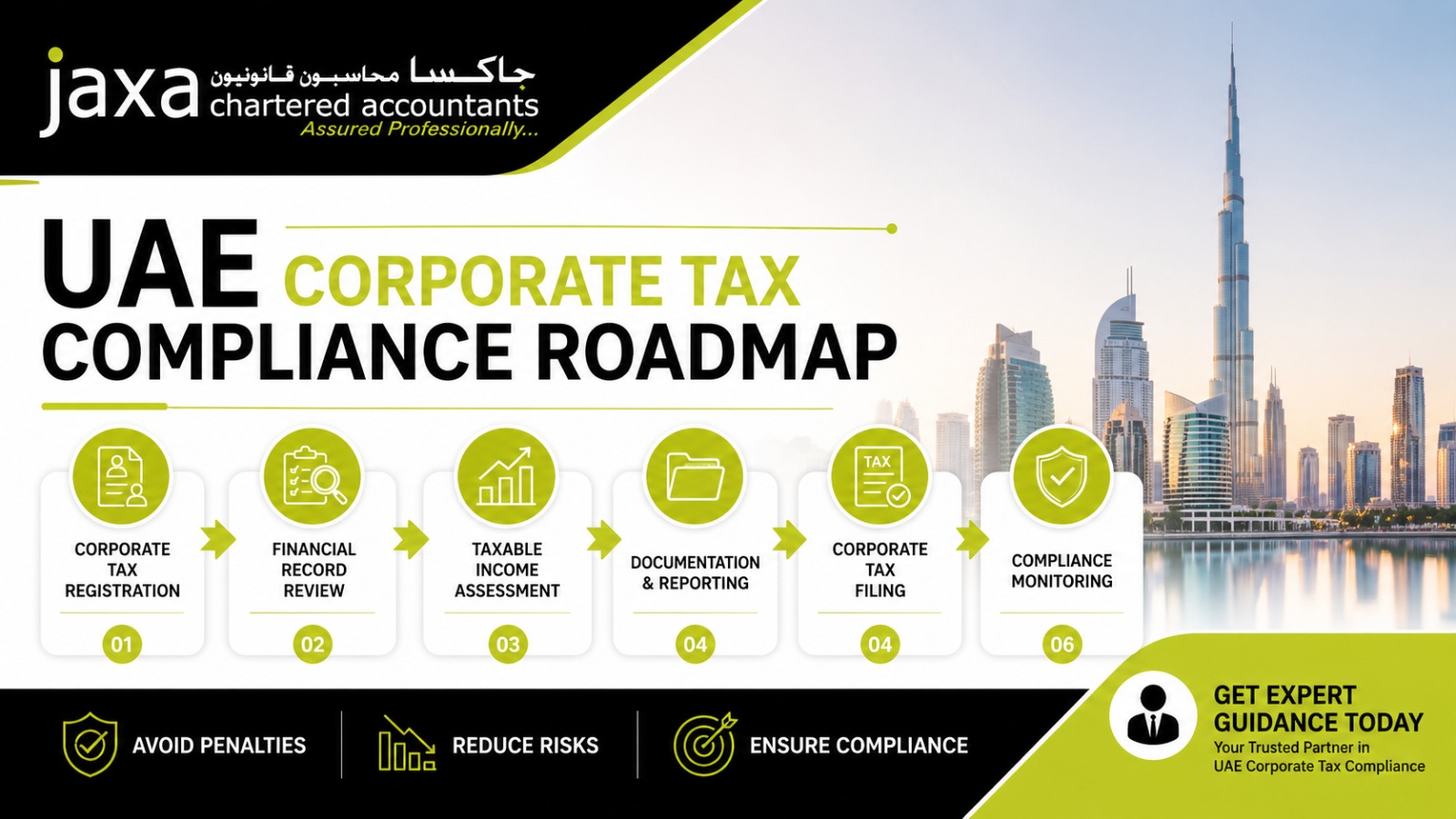

As we progress into 2026, businesses in the UAE must prioritize UAE corporate tax compliance while ensuring consistent and sustainable financial growth. Adhering to corporate tax regulations in the UAE helps to prevent penalties, ensuring business continuity and enhancing reputation. Failure to comply with UAE corporate tax filing obligations may lead to financial penalties and business interruptions.
The launch of corporate tax in the UAE, effective June 2023, has redefined the UAE tax system, requiring businesses to focus on corporate tax compliance while meeting all UAE tax regulations.
Our corporate tax consultant in Dubai presents the corporate tax compliance checklist 2026 to businesses effectively.
Overview of UAE corporate tax compliance
The process of corporate tax compliance in the UAE involves adhering to all statutory tax obligations in accordance with UAE regulations. This includes corporate tax registration, filing tax returns, maintaining accurate financial records, and timely payment of outstanding dues.
UAE corporate tax structure
The UAE corporate tax system adopts a tiered tax structure:
- 0% tax rate on income up to AED 375,000
- 9% tax rate on income exceeding AED 375,000
This system is designed to promote business growth while maintaining a fair and transparent taxation system.
UAE Corporate Tax Rules – Who Needs to Pay?
Before proceeding with compliance requirements, businesses must first assess their exposure to the UAE corporate tax liability. Under the UAE corporate tax framework, the following entities are subject to taxation:
- UAE resident businesses: Taxed on global income
- Foreign entities with a permanent establishment in the UAE: Taxed on UAE-derived income
- Business with profits below AED 375000: 0% tax rate (registration & filing of corporate tax are required.
- Business with profits above AED 375,000: 9% corporate tax to be paid on profits exceeding the limit.
- Free Zone business: eligible for 0% corporate tax on qualifying income, provided they meet all required conditions.
It is important to note that Free Zone businesses are not exempt from corporate tax compliance obligations and hence must register for UAE Corporate Tax.
Who Needs to Register and Comply with UAE Corporate Tax?
Under the UAE corporate tax framework, most business entities are required to ensure complete corporate tax compliance in the UAE, including registration, filing, and reporting obligations:
- Mainland companies: all mainland companies must register for corporate tax, file tax returns, and comply with UAE tax regulations, irrespective of profit levels.
- Free Zone companies: Eligible for 0% tax on qualifying income, but must meet corporate tax compliance and requirements.
- UAE Offshore entities: treated the same as any other companies in the UAE and must register and meet compliance.
- Natural Person: An individual, such as a freelancer or sole proprietor, engaged in business activities, must comply if they exceed the corporate tax revenue threshold of AED 1 million in the UAE.
Key Point: It is important to note that corporate tax compliance is applicable even if no tax is payable.
UAE Corporate Tax Compliance Checklist 2026 (Step-by-Step Guide)
Handling corporate tax compliance in the UAE does not have to be overwhelming. With a structured, step-by-step approach, the process becomes straightforward and can meet their obligations early. This UAE corporate tax checklist 2026 will guide you to ensure complete compliance and avoid penalties.
Step 1: Get registered for corporate tax
- The first step is to officially register your business for UAE corporate tax through the Emaratax portal.
- Register your entity on the Emaratax portal
- Receive your tax registration number
Don’t delay- non-compliance with the registration deadline may result in penalties of AED 10,000.
Step 2: Understand your financial year for corporate tax
- To ensure smooth UAE corporate tax compliance, businesses must understand the UAE’s financial year.
- Determine your official financial year based on incorporation documents, such as the MOA
- Ensure accounting and reporting match your UAE tax period.
- Seek a formal request to the UAE FTA for approval for any changes to your financial year.
Step 3: Keep accurate accounting records for UAE corporate tax compliance:
- Maintaining well-organized financial records is essential for UAE corporate tax compliance and smooth audits.
- Prepare a financial statement aligned with IFRS
- Keep invoices, receipts, contracts, and bank statements
- Ensure a minimum retention period of 7 years
- Implement accounting software for accurate results.
Step 4: Calculate taxable Income for UAE corporate tax
For UAE corporate tax compliance, taxable income must be calculated carefully. It is not equal to your revenue- it is your adjusted profit after deductions and exemptions.
- Start with your accounting net profit.
- Exclude exempt income and related expenses
- Add back non-deductible expenses.
- If eligible, apply for small business relief
- Offset carried forward tax losses from the previous period
Step 5: Submit your UAE corporate tax return
Once your taxable income is finalized, the next step is to complete your UAE corporate tax filing and pay the due tax on time.
- File your corporate tax return via the Emaratax portal within 9 months after the tax year ends.
- Ensure any tax payable is settled within the same deadline
- Review all details carefully before submission
- Retain copies of your submitted return and payment details for future reference.
Step 6: Meet transfer Pricing compliance in the UAE
Those businesses dealing with transactions with related parties must adhere to the UAE transfer pricing rules as part of corporate tax compliance.
- Ensure all transactions adhere to the arm’s length principle.
- Keep proper transfer pricing documentation
- Disclose related party transactions in your corporate tax return.
- Keep the master file and local life in case transfer pricing thresholds are breached.
Step 7: Review Free Zone Corporate Tax Compliance (If Applicable)
To qualify for the 0% corporate tax rate in the UAE Free Zone, businesses must comply with the set regulatory conditions.
- Generate qualifying income as per UAE corporate tax regulations.
- Limit exposure to non-qualifying activities.
- Ensure compliance with economic substance in Free Zones.
- Maintain audited financial statements.
Failure to comply may result in the withdrawal of tax incentives.
Step 8: Perform an internal tax check: Conduct regular internal reviews to ensure UAE corporate tax compliance and identify potential weak areas early.
- Review calculations for accuracy and consistency
- Verify supporting documents and records
- Prepare for possible UAE FTA reviews
Top UAE corporate tax pitfalls that businesses make
No matter how careful you are, experienced businesses may face compliance mistakes. Here are the key UAE corporate tax mistakes businesses avoid:
- Overlooking registration timelines: missing the corporate tax registration timelines may result in financial penalties. Plan and register early.
- Misapplication of VAT and corporate registration number: these are separate registrations- ensure you use the correct TRN for each filing.
- Non-compliance with transfer pricing rules: related party transactions must adhere to the arm’s length principle.
- Inadequate record keeping: missing invoices or disorganized records make compliance difficult and can trigger audit issues. Ensure to keep detailed and verifiable records.
- Failure to assess Free Zone eligibility: not every activity qualifies for 0% tax rate. Always review the eligibility properly.
UAE Corporate Tax Filing Dates for 2026–2027
Corporate tax filing and payment deadlines in the UAE are aligned -both must be completed within 9 months from the end of the company’s fiscal year. The filing and payment must be completed within the same deadline; there is no grace period for payment after filing.
| Financial year-end | Deadline |
| 30 June 2025 | 31 March 2026 |
| 30 September 2025 | 30 th June 2026 |
| 31 December 2026 | 30 September 2026 |
| 31 March 2026 | 31 December 2026 |
| 30 June 2026 | 31 March 2027 |
Key Point: Even if your business qualifies for Small Business Relief or a 0% corporate tax rate, filing your return by the deadline remains mandatory.
Who Regulates Corporate Tax in the UAE?
The UAE Federal Tax Authority (UAE FTA) is the official government body responsible for administering and enforcing UAE corporate tax regulations. It plays a central role in ensuring that businesses comply with UAE tax laws and reporting requirements.
Its key role includes:
- Handling tax registration & compliance management
- Conducting tax audits & inspection to verify inspections
- Enforcement of penalties and fines for non-compliance
- Monitoring business activities through digital platforms and reporting tools.
Best practices to stay UAE corporate tax compliant in 2026
To stay compliant with UAE corporate tax laws, businesses must adopt a year-round approach rather than relying on last-minute actions. Regularly keep your financial records updated to avoid last-minute compliance issues during tax filing.ng
- Plan for tax payments in Advance to meet your corporate tax liabilities.
- Check updates & notifications from the UAE FTA to remain aligned with the latest compliance requirements
- Keep conducting compliance reviews regularly to identify and resolve issues before they arise.
- Work with a qualified tax consultant to ensure accurate compliance and financial reporting.
How does Jaxa Auditors help to stay compliant?
In 2026, corporate tax compliance in the UAE is no longer optional- it is a mandatory requirement for all businesses operating in the region. From registering for corporate tax in the UAE to ongoing record-keeping and filing corporate tax on time, every step must be handled with precision and adhere to UAE FTA guidelines.
Partner with Jaxa Chartered Accountants, an established accounting and auditing firm with 18+ years of experience in UAE auditing and taxation services. Backed by industry expertise and practical insights, our certified FTA tax agents provide end-to-end guidance across all stages of compliance.
Our structured compliance approach:
- Stay compliant with UAE FTA regulations
- Reduces the risk of penalties and audits
- Strengthens financial transparency and accuracy
- Support from the UAE FTA tax agent, such as Jaxa
Our corporate tax consultant in the UAE delivers tailored taxation solutions, ensuring businesses remain compliant, minimize risk, and operate with confidence under UAE corporate tax regulations.
Experience seamless corporate tax compliance with expert precision. Partner with Jaxa for reliable advisory and support.
Book a Free Consultation.
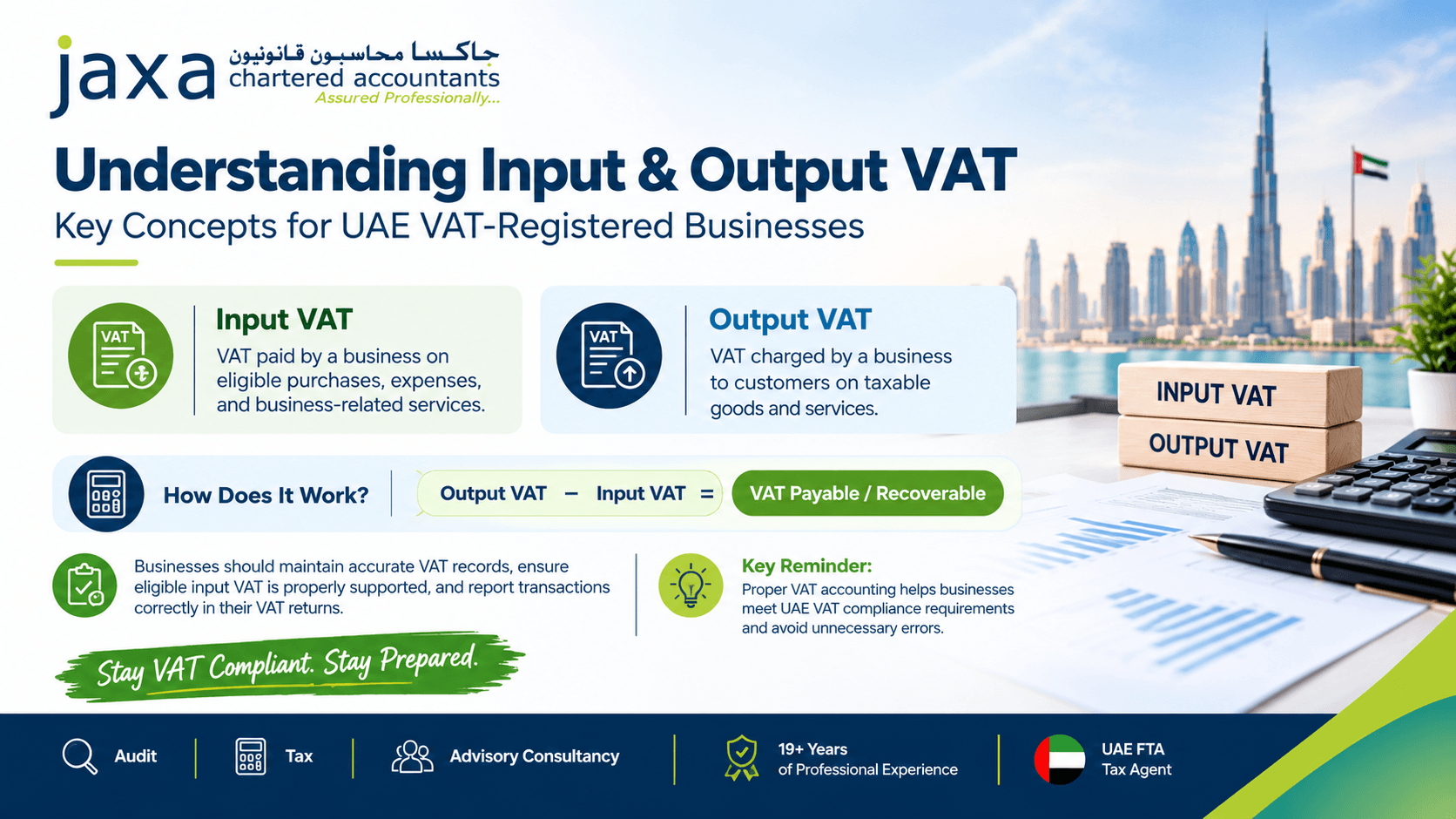

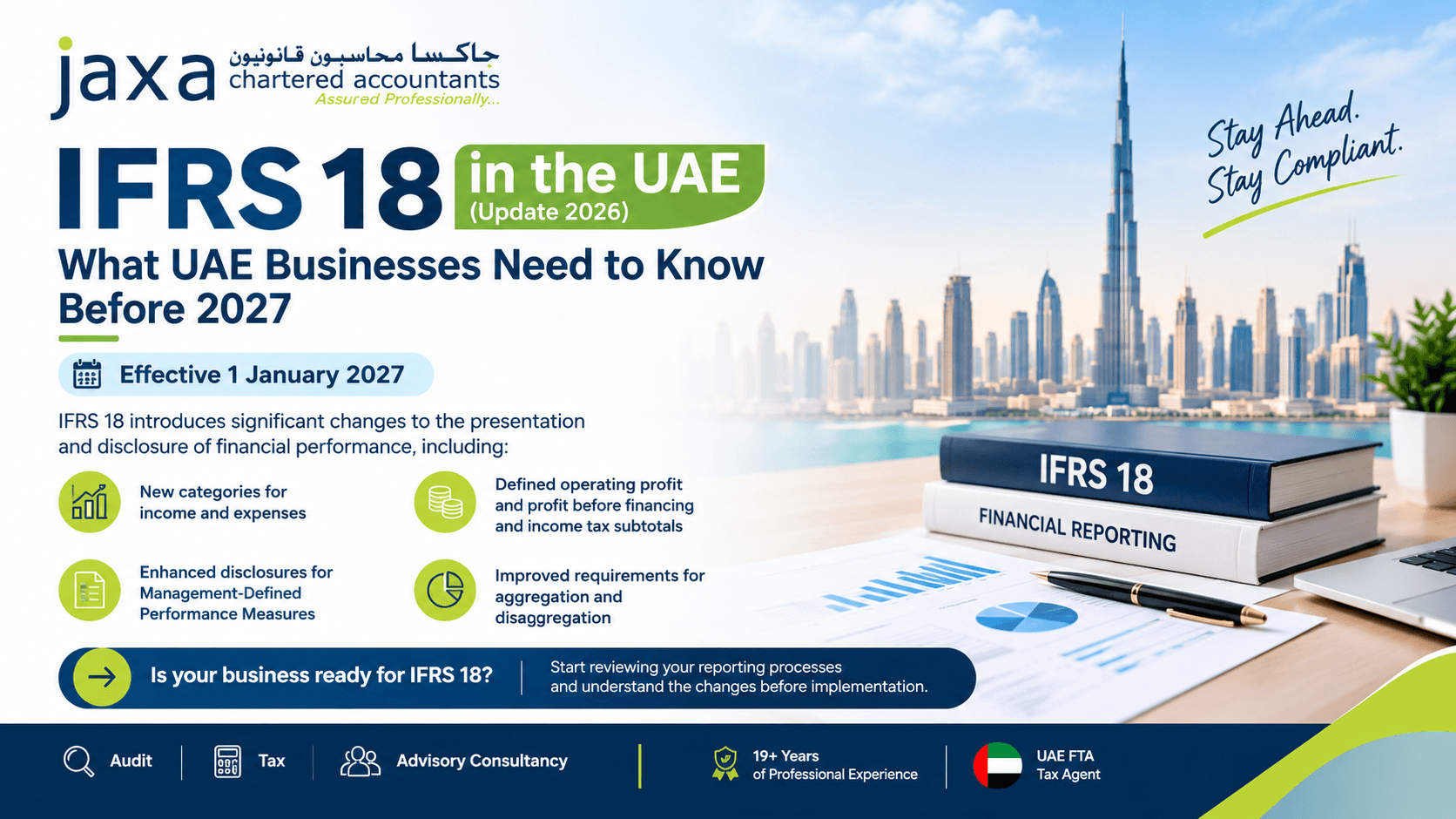
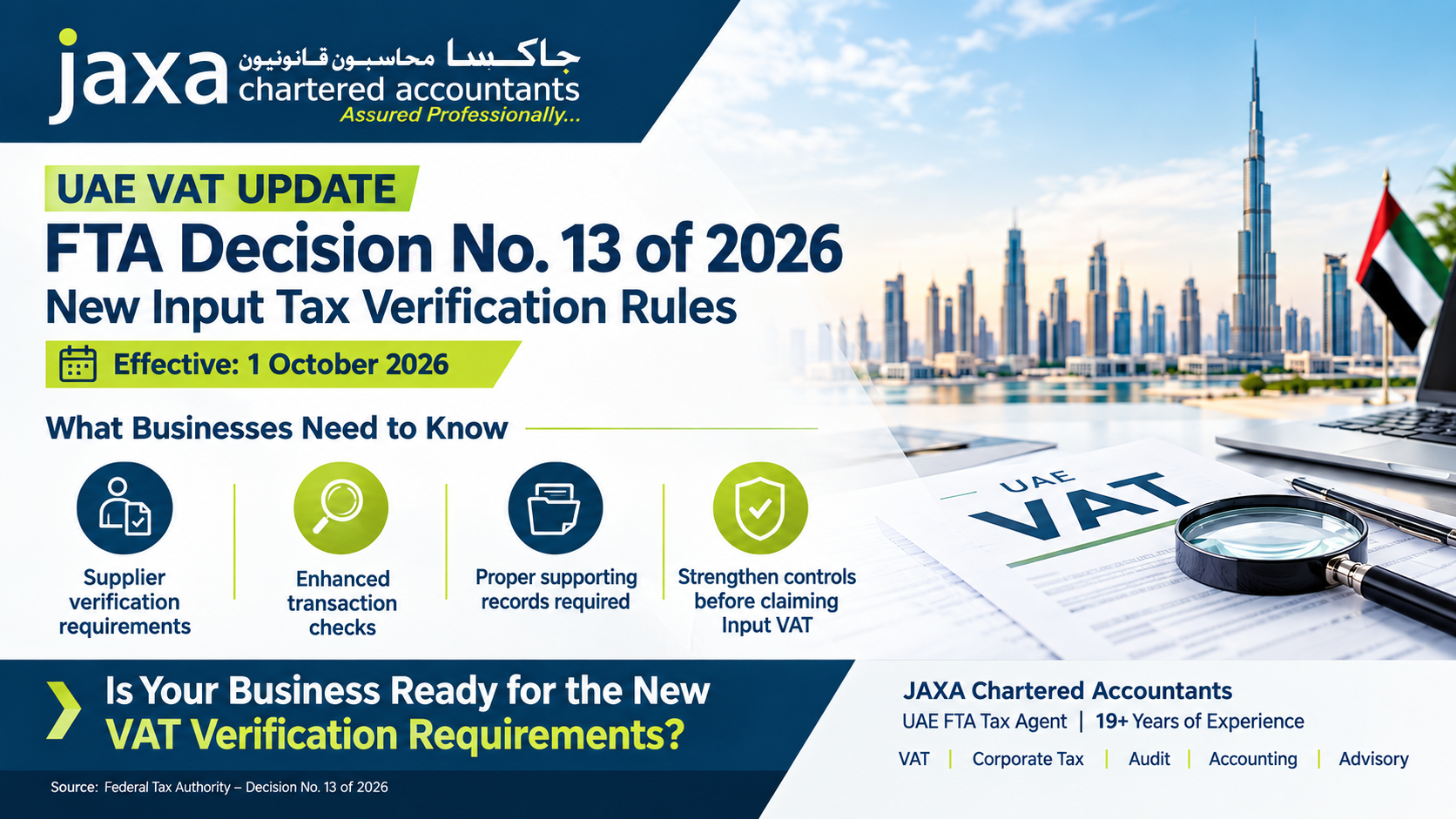

 Reach us on WhatsApp