
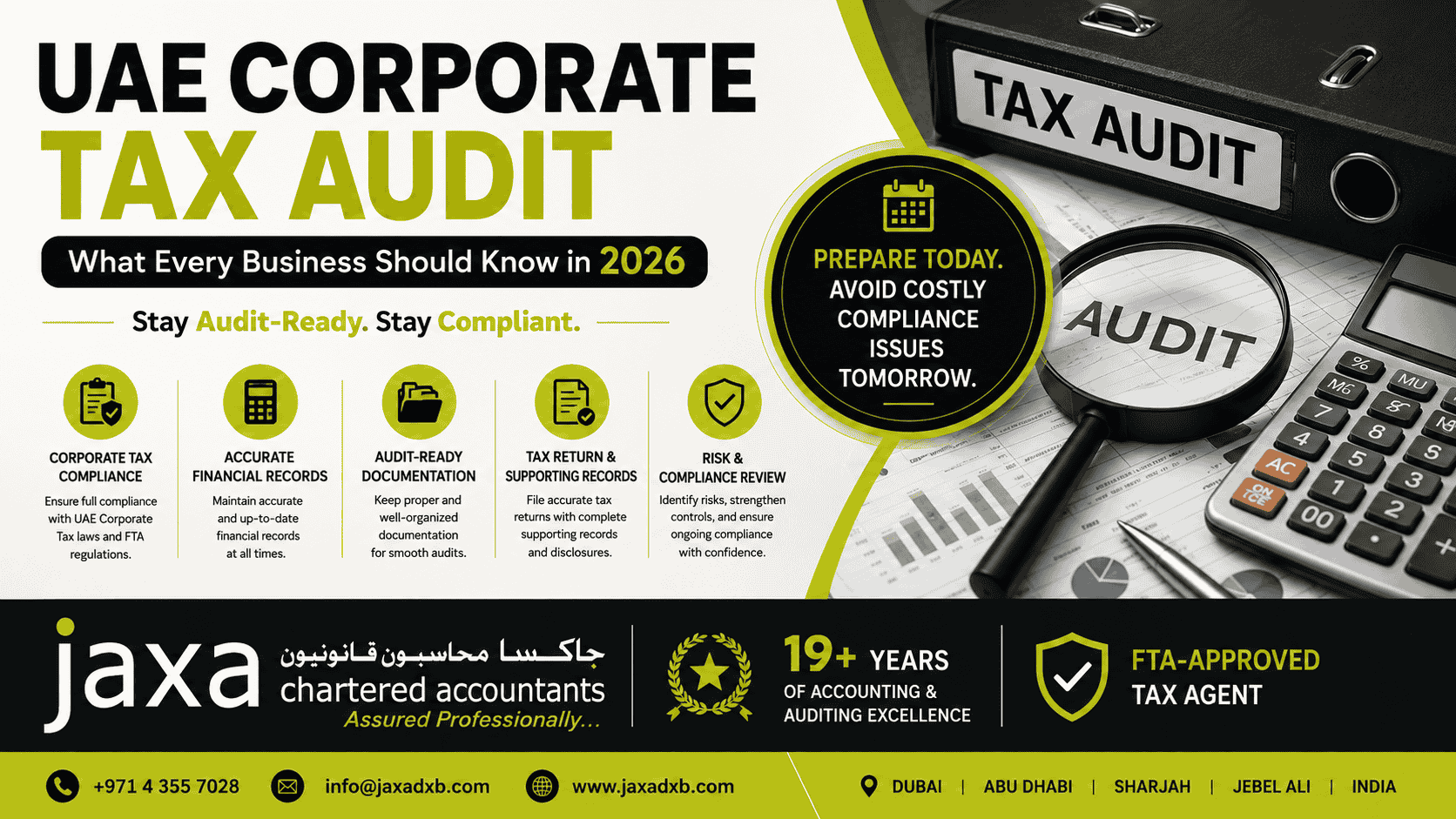

The UAE’s corporate tax landscape has entered a new phase in 2026. The first filing season has been completed, and the UAE FTA is actively reviewing businesses through data-driven compliance checks, automated cross-verification in Emara Tax, and a strengthened penalty regime. Maintaining accurate records and supporting documents is no longer just good practice-it’s essential for compliance.
A corporate tax audit in the UAE is an official review by the UAE Federal Tax Authority (FTA) to assess whether a business has accurately calculated, reported, and paid its corporate tax dues. As the UAE’s corporate tax regime continues to evolve, businesses should be prepared for the possibility of an UAE FTA audit. The UAE corporate tax audit may involve examining financial records, tax returns, accounting records, and other supporting documents to ensure compliance with UAE corporate tax law.
In this guide, you’ll learn everything you need to know about a UAE corporate tax audit-from what can trigger an audit and the records the UAE FTA may request to the audit timeline and dispute procedures.
Overview of UAE Corporate Tax Audit
A corporate tax audit is a compliance review conducted by the Federal Tax Authority to verify that a business has accurately reported its taxable income and paid the correct amount of corporate tax. During the audit, the FTA may request financial statements, tax returns, accounting records, invoices, contracts, and other supporting documents to verify compliance with UAE Corporate Tax Law.
Corporate tax audit requirements in the UAE
Under UAE corporate tax regulations, certain businesses are required to maintain audited financial statements to meet their tax compliance obligations. Key categories include:
- Taxable person with revenue exceeding AED 50 million in the relevant tax period.
- Qualifying Free Zone persons (QFZPs).
Professional auditing services in the UAE can help businesses maintain compliant financial records and meet applicable audit requirements. At the same time, corporate tax services in Dubai can support accurate tax calculations, return filing, compliance reviews, and preparation for potential FTA scrutiny.
UAE Corporate tax compliance: Why FTA audits are rising in 2026
The UAE’s corporate tax compliance environment has become more data-driven in 2026, increasing the likelihood of businesses being under FTA scrutiny. Three key developments are contributing to this shift:
- Greater FTA Monitoring: Changes introduced under the Federal Decree-Law No.17 of 2025, effective from 1 January 2026: The Tax Procedures framework has strengthened the UAE FTA’s ability to review and enforce tax obligations.
- Risk-based compliance reviews: UAE FTA reviews businesses when their tax filings or financial information indicate potential risks.
- Emaratax cross-checks: Information reported for UAE VAT and corporate tax can be compared, making differences in turnover or revenue easier for the FTA to identify.
For businesses, this means keeping accurate accounts, consistent tax filings, and proper supporting records is more essential. Professional corporate tax and auditing services in the UAE can help identify potential issues before they become costly compliance issues.
What can trigger a corporate tax audit in the UAE?
Not every business will be selected for an FTA audit. However, certain tax reporting patterns and compliance issues can increase the likelihood of a UAE FTA review. Common triggers include:
- Discrepancies in figures reported for VAT and corporate tax.
- Missing invoices, contracts, records, or other supporting documents
- Unsupported expense claims in corporate tax return
- Late, amended, or inconsistent corporate tax return
- Inadequate transfer pricing documentation for related-party transactions
- Insufficient documentation supporting a Free Zone entity’s QFZP status or qualifying income.
- Frequent voluntary disclosure or repeated corrections to tax filings
- Inconsistencies between accounting records and tax returns
- Incorrect treatment of exempt, zero-rated or taxable income
If your business falls into any of these categories, an early tax compliance review can help uncover gaps and address potential issues before an FTA audit. Working with experienced corporate tax and audit professionals can help keep your records and filings in order.
UAE Corporate Tax Audit Records: What UAE businesses should Keep
Proper recordkeeping is a key part of corporate tax compliance in the UAE. Businesses should maintain sufficient documents to support the figures reported in their corporate tax returns and provide them when requested by the UAE FTA.
| Type of records | Retention Period |
| Corporate tax return & financial statements | 7 years |
| Accounting records, invoices & contracts | 7 years |
| Transfer Pricing Records | 7 years |
| VAT records & Tax Invoices | 5 years |
| Real estate transaction records | 15 years |
Maintaining organized financial and tax records makes it easier to respond to an FTA corporate tax audit and demonstrate how income, expenses, deductions, and other tax positions were calculated.
For businesses dealing with both VAT and Corporate tax in the UAE, keeping relevant records for the longer applicable period can simplify record management and reduce the risk of missing important documents.
UAE corporate tax audit process: step by step
A UAE corporate tax audit involves several stages, from the FTA selecting a business for review to issuing its findings. Understanding each stage can help businesses prepare their records and respond efficiently.
- Audit Selection: The FTA may select a business for audit based on compliance risk, inconsistencies in tax information, unusual transactions, or other factors identified through its monitoring processes.
- Audit notification: The business receives an official FTA audit notification outlining the scope of the audit, tax period covered, required documents, and deadlines for submitting the requested information. The business should review the notice carefully and respond within the specified timeframe.
- Document preparation: The business should gather corporate tax return, financial statements, accounting records, invoices, contracts, transfer pricing documentation, and other supporting records. Keeping documents organized by tax period can make the process more efficient.
- UAE FTA audit and review: The UAE FTA reviews the company’s records and tax position to determine whether the business has correctly calculated, reported, and paid its corporate tax liabilities. The authority may request additional information or clarification during the review.
- Audit findings: Once the review is completed, the UAE FTA communicates its review and highlights any identified tax or compliance issues and may request clarification or supporting evidence for specific concerns.
- Final assessment and resolution: Once the audit is completed, the FTA communicates its final findings and determines whether any additional tax, penalties, or corrective actions are required. If the business disagrees with the decision, it may use the reconsideration and tax dispute procedures under UAE corporate tax law.
- Tax dispute resolution committee: If the matter remains unresolved after the reconsideration, an eligible dispute may be referred to the Tax Dispute Resolution Committee (TDRC) within the applicable 40-business day period. The required tax and penalties must be settled before filing, and the supporting documents must meet the applicable Arabic-language requirements.
- Court Appeal: Where permitted under UAE tax procedures, a party that remains dissatisfied with the TDRC decision may take the matter to the competent court within the prescribed timeframe.
UAE Corporate Tax Audit Penalties: 2026 Tax Framework
Non-compliance under Corporate Tax attracts severe penalties, some of which include:
| Compliance | Applicable Penalty |
| Failure to maintain required records (first violation) | AED 10,000 |
| Failure to keep required records (repeat violation) | AED 20,000 |
| Failure to facilitate a tax auditor | AED 20,000 |
| Incorrect tax return | AED 500, subject to the correction exceptions |
| Late payment of payable tax | 14% per annum, imposed monthly or part thereof |
| Failure to make a required voluntary disclosure before FTA audit notification | 15% fixed + 1% per month /part month on the tax difference |
| Voluntary disclosure of an error | Penalty calculated according to the applicable Voluntary disclosure rules |
The above framework highlights the importance of early error detection and voluntary correction. Businesses should regularly review their corporate tax filings, accounting records, and supporting documents rather than waiting until an FTA audit identifies an issue.
An expert corporate tax consultant in the UAE, such as Jaxa, always helps businesses to identify potential compliance gaps and take appropriate corrective actions.
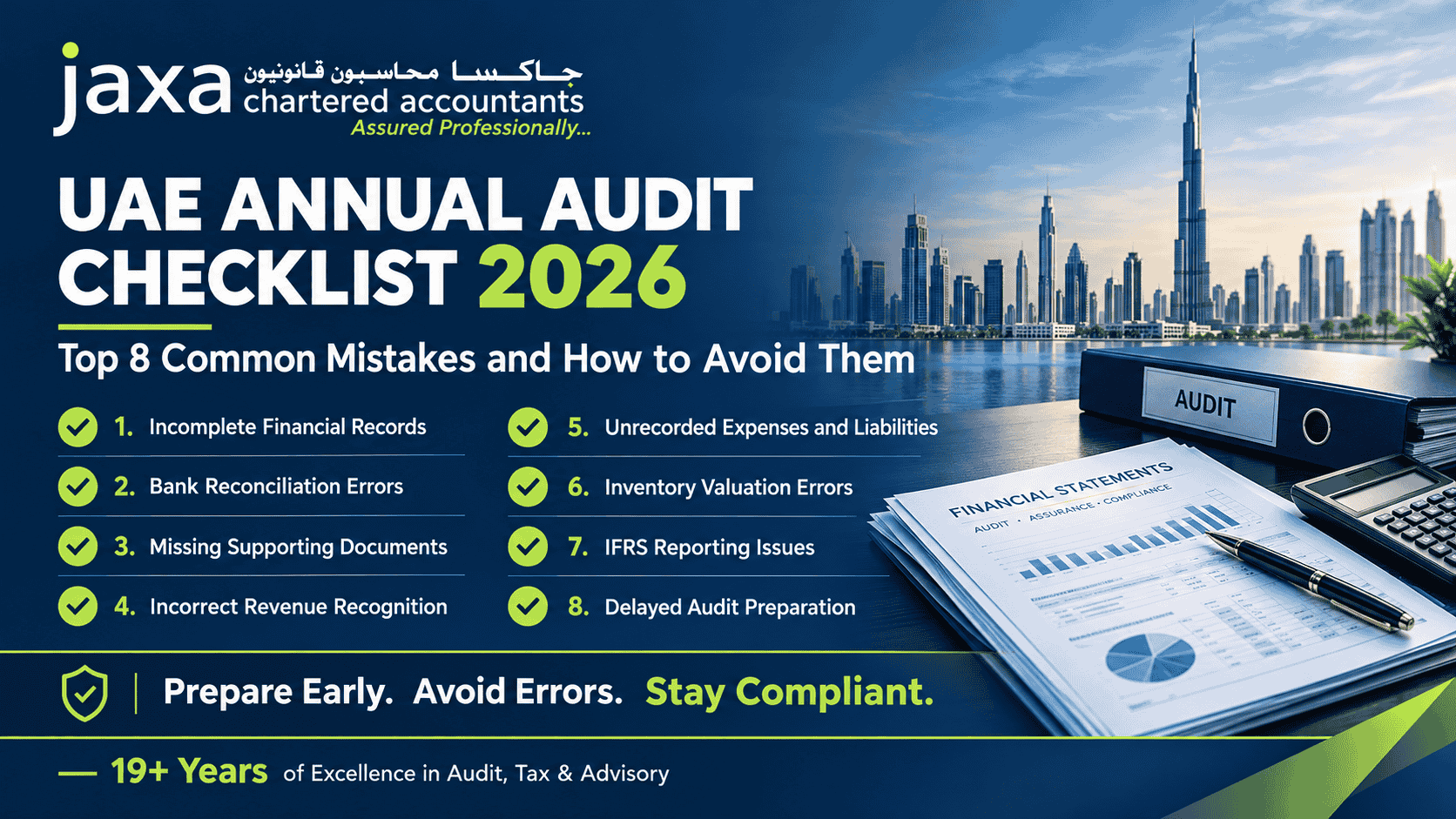
What are the common corporate tax mistakes that trigger an FTA audit in the UAE?
Errors in tax filing may increase the risk of UAE FTA scrutiny. Some common corporate tax compliance issues:
- Incorrect reporting of income or deductible expenses
- Incorrect classification of transactions
- Non-compliance with UAE corporate tax regulations
- Lack of accurate UAE corporate tax return filings
How to reduce corporate tax audit risk
- Record income and expenses accurately and on time.
- Maintain complete invoices, receipts, bank statements, and accounting records
- Classify transactions correctly as per UAE corporate tax
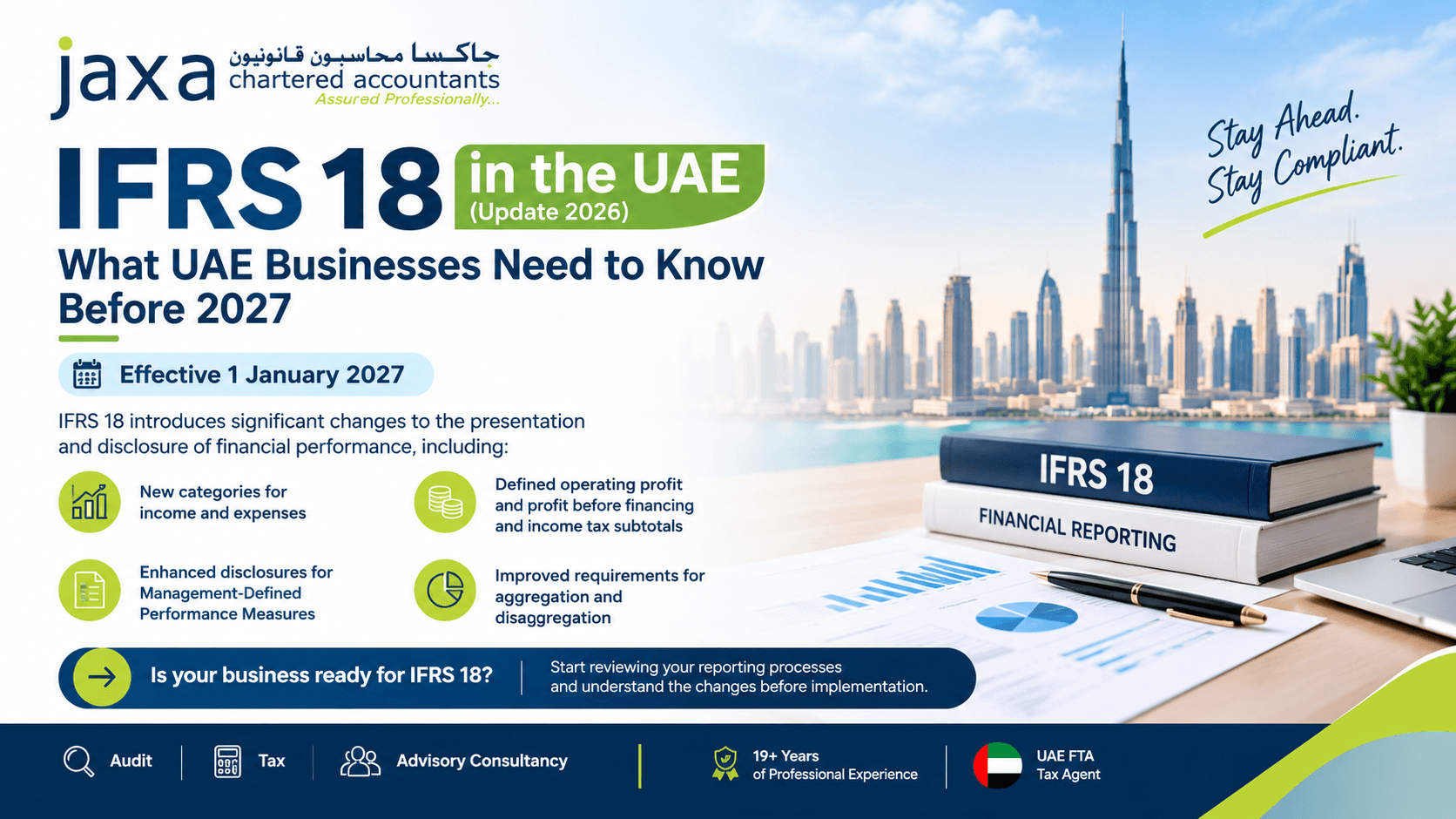
- Comply with IFRS
- Conduct regular tax compliance reviews and reconciliations
- File UAE corporate tax returns accurately within the stipulated deadline
- Seek a corporate tax advisor in the UAE.
How to Prepare for a Corporate Tax Audit in the UAE
Preparing for an FTA corporate tax audit in the UAE should be an ongoing compliance practice rather than something you start after receiving an audit notice. Businesses should maintain proper records and regularly review their corporate tax compliance, instead of waiting for an audit notice.
Corporate tax audit preparation checklist
- Reconcile VAT and corporate tax records: check VAT turnover against corporate tax revenue and investigate any differences before filing.
- Maintain corporate tax records: Keep financial statements, invoices, contracts, tax returns, and accounting records properly organized and accessible.
- Keep transfer pricing documents updated: Maintain the required documentation for related-party and connected-person transactions.
- Conduct regular internal tax review: Periodic review can help identify errors, inconsistencies, and compliance gaps early.
- Meet QFZP requirements: Keep the required evidence to support your QFZP status and qualifying income.
- Get professional tax and audit support: Experienced corporate tax consultants and auditing professionals in the UAE can help review records, identify risks, and support businesses during an UAE FTA audit or tax dispute.
The goal is simple: To stay prepared by keeping your corporate tax records accurate, complete, and ready for UAE FTA reviews at all times.
Jaxa Auditors: the best corporate tax consultant in the UAE
A UAE corporate tax audit can be easier to manage when your records, tax filings, and supporting documents are prepared well in advance. Partnering with a tax agent in the UAE can make a big difference.
Jaxa Chartered Accountants, an UAE FTA tax agent with 19+ years of experience, helps businesses prepare for and manage their corporate tax compliance requirements. Our team of qualified experts helps businesses stay compliant and respond confidently throughout the FTA audit process.
Our corporate tax services in the UAE
- Corporate tax registration in the UAE
- Corporate tax return filing in the UAE
- Corporate tax compliance in the UAE
- Transfer pricing compliance
- UAE FTA representation
Our experienced team also assists with auditing services, financial statement preparation, and documentation to help businesses remain audit-ready.
With the support of Jaxa, expert corporate tax consultants in the UAE can help businesses maintain organized records, strengthen tax compliance, maintain effective internal control, and address potential issues early, making the UAE FTA audit process more efficient.
Stay ahead of your UAE FTA corporate tax audit.
Stay compliant and audit-ready with expert support from Jaxa Auditors, an UAE FTA-approved tax agent in the UAE.
Talk to our corporate tax experts today.
FAQ
1. Do Free Zone Companies Face Corporate Tax Audits?
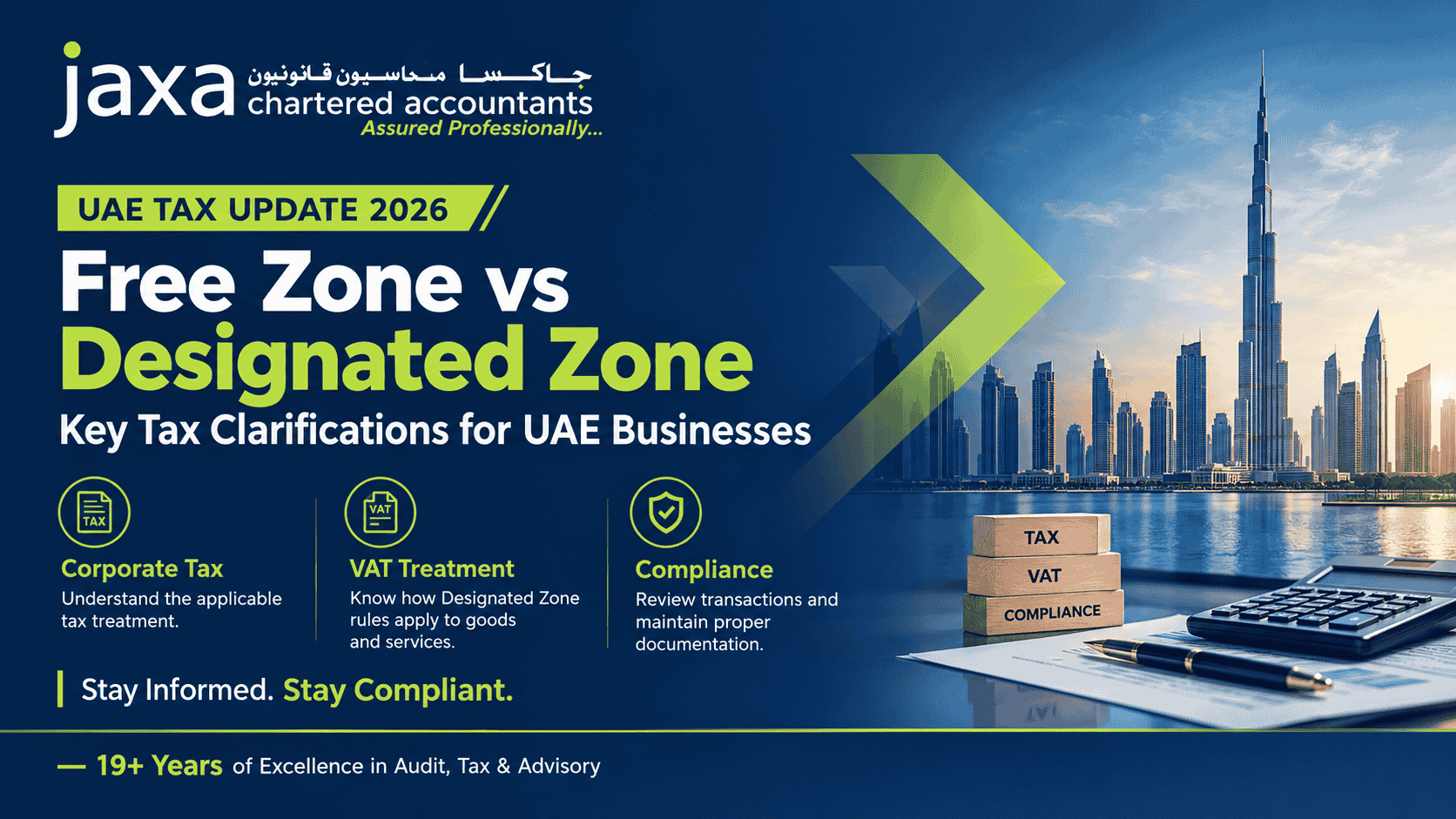
Yes. Free Zone companies can be subject to FTA corporate tax audits. QFZPs must maintain proper records and evidence to support their 0% Corporate Tax eligibility and compliance with applicable requirements.
- How Long Does an UAE FTA Corporate Tax Audit Take?
The duration varies depending on the complexity of the audit, the records required, and FTA queries. There is no fixed overall timeline, but certain dispute stages have defined deadlines.
- What Happens If a Business Fails a Corporate Tax Audit?
If the FTA identifies tax errors or non-compliance, the business may have to pay additional tax along with applicable penalties and late-payment charges. Further penalties may apply for issues such as inaccurate returns or failure to maintain required records.
- Why Choose JAXA for Corporate Tax Audit Support?
It’s best to seek professional support before an FTA audit notice arrives. JAXA can review your corporate tax records, identify potential compliance gaps, and help keep your business audit-ready.


 Reach us on WhatsApp