
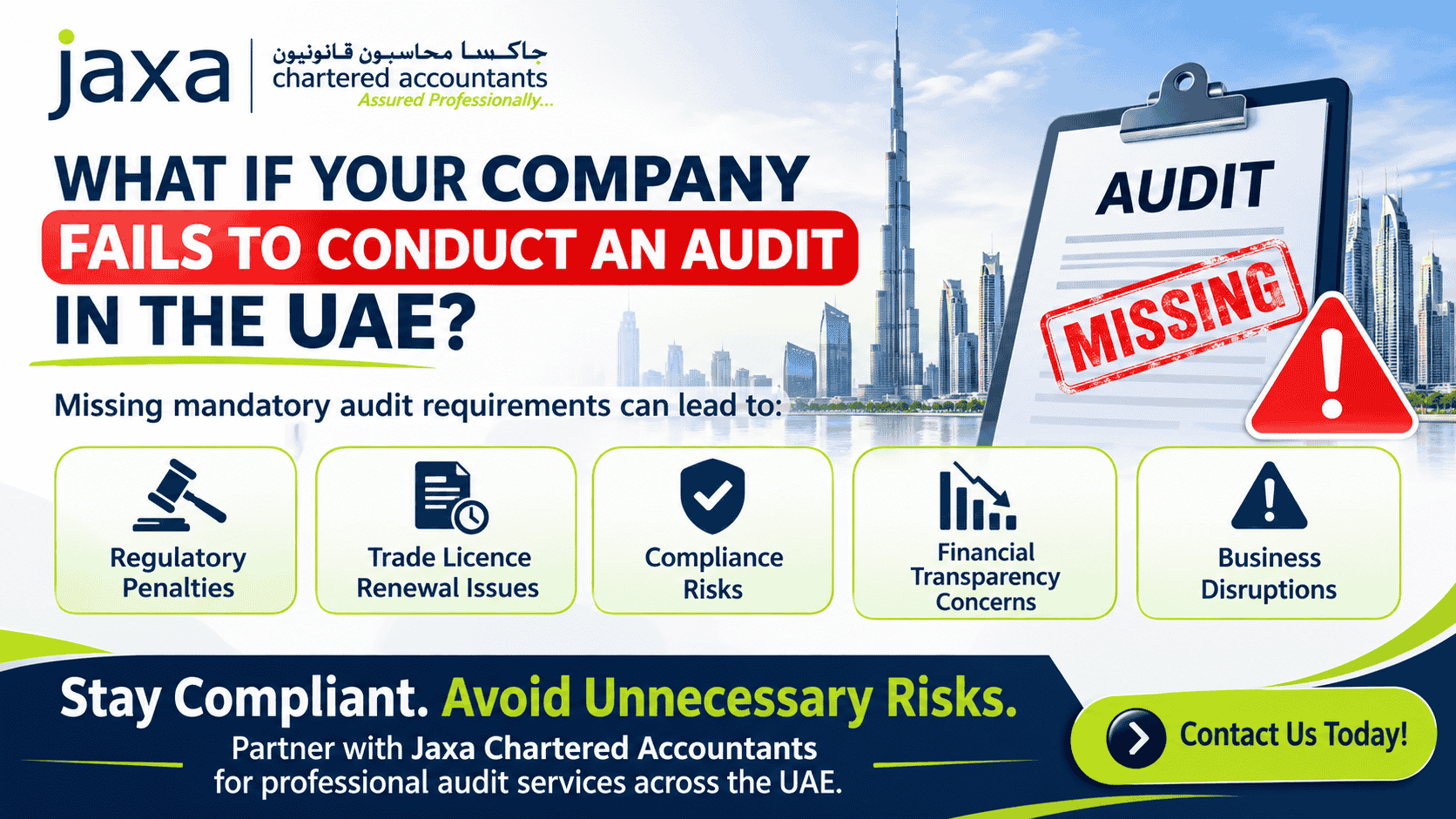

Is your company meeting its mandatory audit requirements in the UAE? Audit compliance is a critical part of responsible business management in the UAE. Companies operating under different licensing authorities and legal frameworks may have special requirements and may have specific requirements for preparing and submitting audited financial statements. Missing these obligations can create regulatory and operational challenges, making it important to understand the rules that apply to your business. Understanding UAE company audit requirements, statutory audit obligations and financial reporting deadlines is essential for business to maintain regulatory compliance.
At Jaxa Chartered Accountants, we provide professional auditing services in the UAE, helping businesses to manage statutory audits, financial statements audits, and UAE audit compliance requirements. Our auditors in the UAE help businesses understand their audit requirements, prepare accurate financial statements and meet applicable regulatory obligations. In this guide, we explore the potential consequences of missing a mandatory company audit and the steps business can take to address non-compliance.
Importance of Regular Audits in Supporting Business Compliance in the UAE: Guide from Best Auditing Firm in the UAE
A regular audit helps businesses maintain valuable insights for evaluating financial records, improving accountability, strengthening internal control and identifying potential financial discrepancies. Working with an experienced audit firm in Dubai or Abu Dhabi can help businesses understand their reporting obligations, maintain financial transparency and manage audit-related compliance risks.
Risk of missing a mandatory company Audit in the UAE
Failing to complete a mandatory company audit in the UAE can expose businesses to regulatory, financial and operational risks. Depending on the applicable laws, licensing authority and nature of the non-compliance, companies may face the following consequences.
- Financial Penalties: Failure to meet mandatory audit requirements in the UAE may result in penalties, depending on applicable UAE audit regulations and compliance obligations.
- Regulatory consequences: Non-compliance with UAE audit requirements may lead to regulatory scrutiny and actions, depending on applicable UAE laws and licensing authority.
- Delay in renewing business license: Failure to submit required audited statements may delay business license renewals and other relevant regulatory procedures in the UAE.
- Reputational damage: Failure to maintain accurate audited financial statements may weaken investor confidence, affect stakeholders trust and damage business credibility.
- UAE Corporate tax obligations: Business must comply with applicable corporate tax reporting and audit requirements to avoid potential compliance and regulatory challenges.
Who needs to conduct an audit in UAE?
The requirement for auditing in the UAE depends on its legal structure, jurisdiction and regulatory obligations. Some entities must prepare audited financial statements while others may be subject to specific audit requirements under applicable UAE corporate tax regulations.
UAE Mainland company audit requirements and companies
Mainland companies in the UAE must assess their audit obligation based on their legal structure, business activities and licensing requirements. Such businesses should understand their statutory audit requirement, financial reporting obligations and applicable regulatory guidelines.
Certain entities may need to undergo an annual statutory audit, prepare audited financial statements, and comply with relevant UAE financial reporting standards.
Engaging a professional auditing firm in Dubai, UAE or Abu Dhabi will help businesses strengthen financial transparency and regulatory compliance.
Free Zone Audit requirements and compliance in the UAE
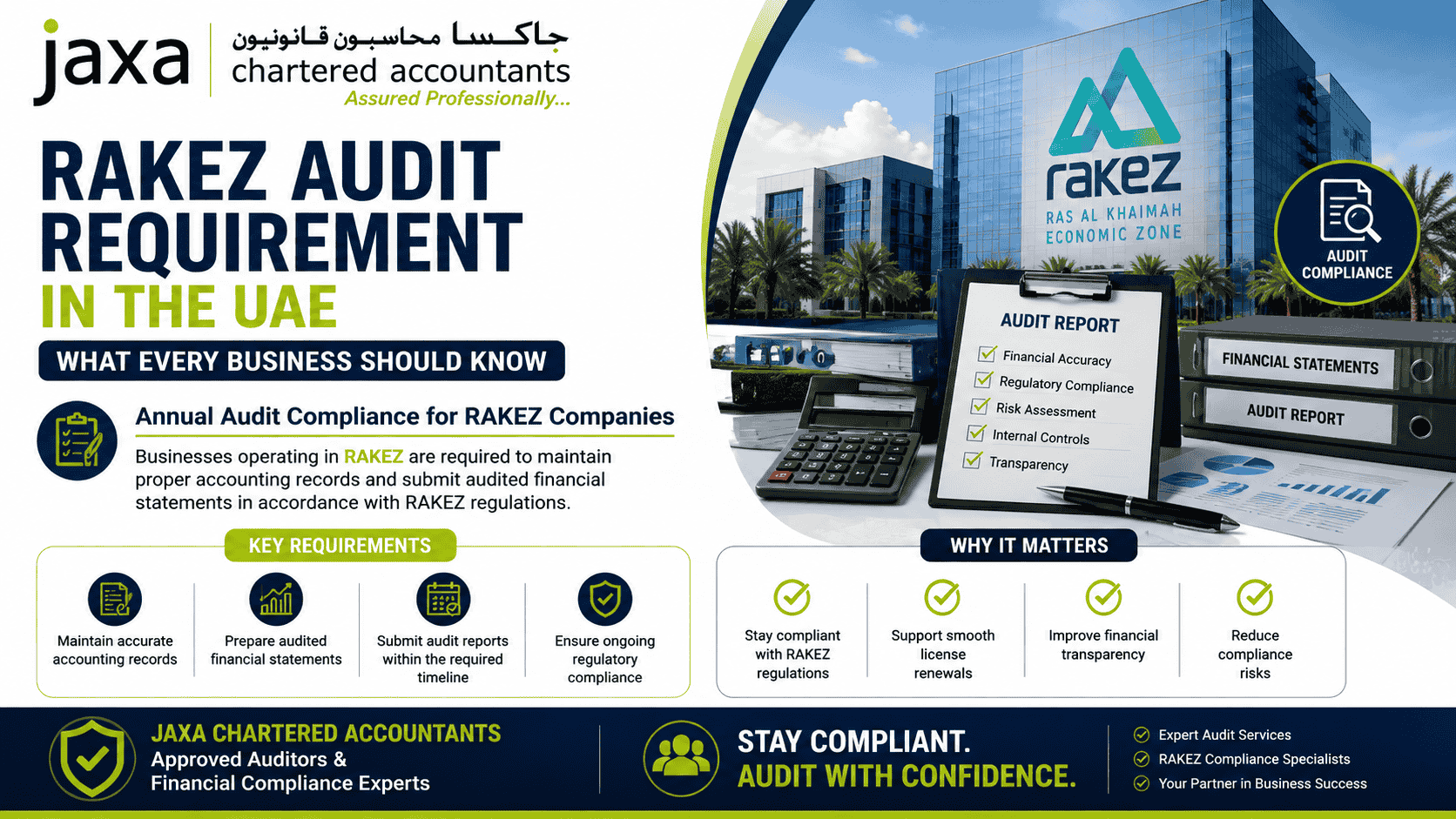
Audit requirements vary across UAE free zone authorities, including DMCC, IFZA, RAKEZ, DIFC and Meydan, DSO and many other free zone authorities. Depending on the key applicable regulations, companies may need to fulfill the following obligations:
- Annual audited financial statements: Prepare and submit audited financial statements where required by relevant free zone authority.
- Approved auditor appointment: Appoint an auditor registered or approved by the respective free zone authority.
- Audit filing deadline: Submit audited financial statements within the prescribed timeframe.
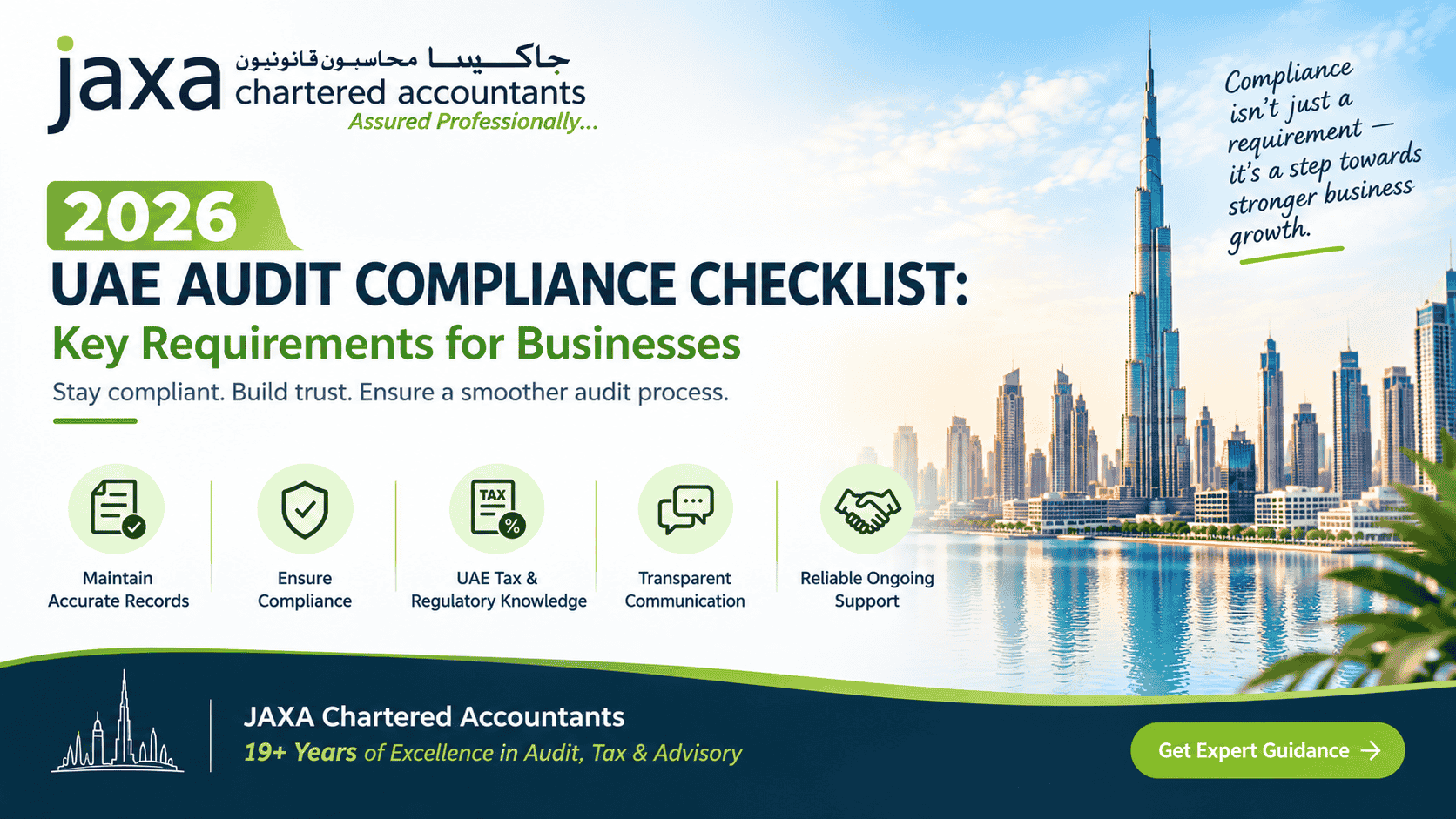
- Financial reporting compliance: Maintain accurate accounting records and comply with applicable reporting standards.
- Regulatory compliance: Understand the specific audit obligations and filing requirements applicable to the relevant UAE free zone.
Jaxa Chartered Accountants LLC is a registered auditor with all major Free Zones Authorities in the UAE including DMCC, IFZA, RAKEZ, DIFC and Meydan, DSO, supporting businesses with professional auditing services in the UAE. Our auditors are experienced in understanding their UAE Free zone audit obligations, prepare for statutory audits and meet applicable financial reporting requirements.
UAE Corporate tax audit requirement under Ministerial Decision No. 84 of 2025
Under UAE Corporate tax regulations, certain businesses must prepare and maintain audited financial statements in accordance with Ministerial Decision No. 84 of 2025, applicable to tax periods commencing on or after January 1, 2025. The requirements apply to the following categories:
- Businesses with revenue exceeding AED 50 million: Taxable persons that are not members of a Tax Group must prepare and maintain audited financial statements if their revenue exceeds AED 50 million during the relevant tax period.
- Qualifying Free Zone Person: All Qualifying Free Zone Person must prepare and maintain audited financial statements, regardless of their revenue.
- Tax Groups: Tax Groups must prepare and maintain special-purpose audited financial statements in accordance with the applicable UAE corporate tax regulations.
Businesses should verify their UAE corporate tax audit obligations and audit requirements of their respective licensing authorities to maintain regulatory compliance.
What should a company do if it misses an audit deadline in the UAE?
Missing an audit deadline in the UAE can create compliance challenges, potential penalties and delays in meeting regulatory obligations.
The steps to resolve a missed audit deadline depend on the company’s jurisdiction, business license conditions and UAE applicable audit regulations. Here is what businesses should do if they miss UAE audit submission date.
Step 1: Verify the Audit Deadline and Compliance Requirements
Review the applicable UAE audit requirements to determine why the deadline was missed and what obligations remain outstanding.
Key actions:
- Identify the applicable audit regulations and licensing conditions
- Confirm the financial year and audit reporting period
- Verify the audit submission deadline
- Determine whether any additional reporting obligations apply under relevant UAE corporate tax law.
Understanding these requirements helps business identify the appropriate corrective actions and avoid further compliance
Step 2: Contact the Relevant Licensing Authority:
Contact the relevant UAE licensing authority or free zone regulator to understand the procedure for late audit submission.
Key Actions:
- Check whether a compliance notice has been issued
- Confirm whether late submission penalties may apply
- Enquire about additional documentation or corrective procedures
- Follow the authority’s official instructions for regularizing compliance.
Penalties and procedures can vary depending on the jurisdictions and nature of the missed obligations.
Step 3: Appoint an approved Auditor in the UAE
If the audits remain outstanding, appoint a qualified auditor who meets the applicable regulatory requirements. Certain UAE free zones require companies to engage an auditor from their approved auditor list.
Key Actions:
- Verify the auditor’s professional qualifications
- Confirm whether the relevant authority requires an approved auditor
- Share the company’s financial records and reporting requirements
- Agree on the audit scope and expected completion timeline
Working with a seasoned auditing firm in the UAE can help businesses complete the audit process efficiently and address outstanding reporting obligations.
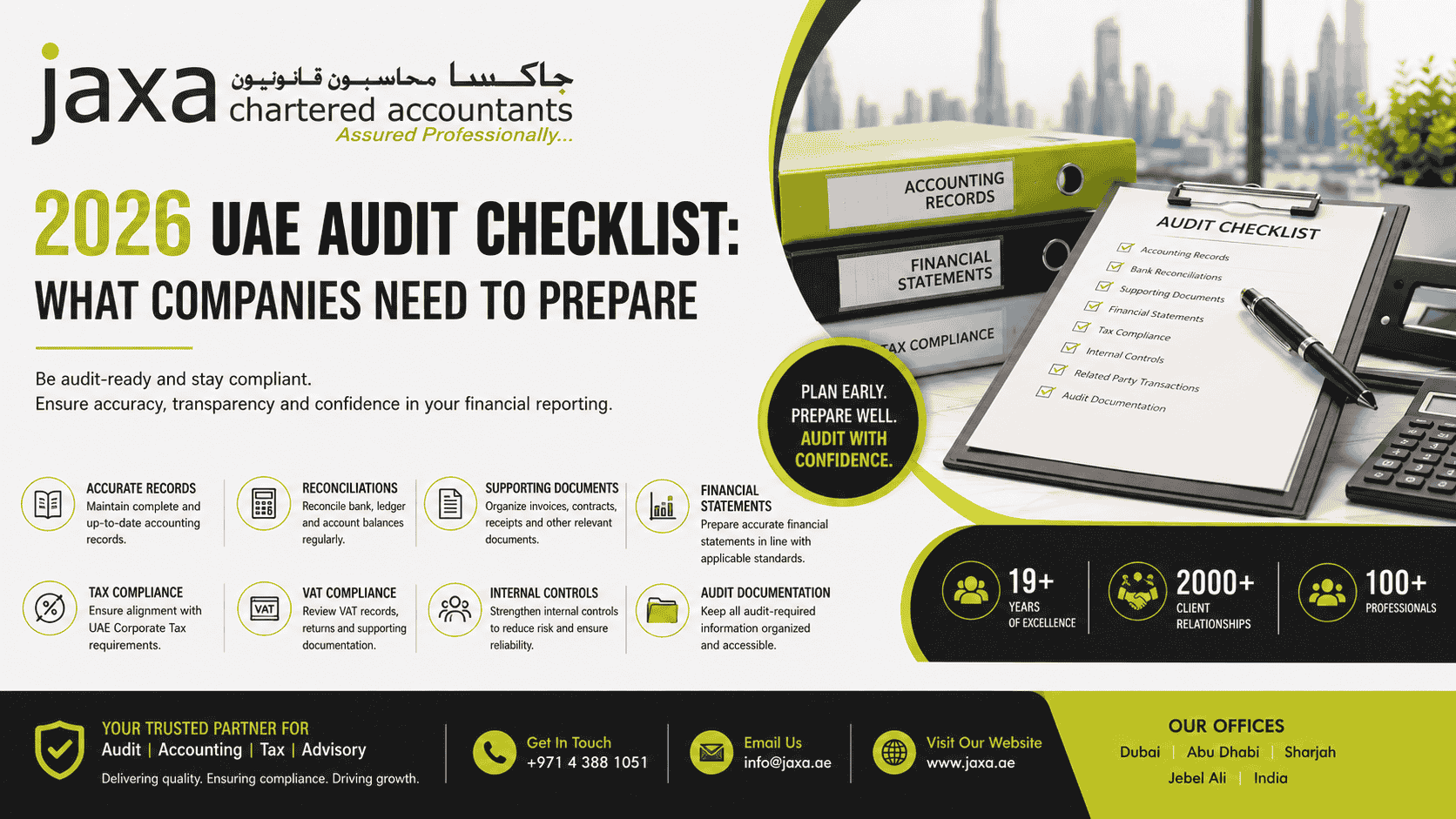
Step 4: Prepare financial records and supporting documents: Accurate financial records are essential for completing an audit and addressing outstanding reporting requirements.
Key documents to prepare:
- Financial statements, trial balance and general ledger
- Sales invoices, purchase invoices and expense record
- Bank statements and bank reconciliations
- Accounts receivables and accounts payable schedules
- Fixed asset register and loan agreements
- UAE VAT return and Corporate tax records, where applicable.
Maintaining complete and organized documentation helps the auditors verify financial transactions, identify discrepancies and conduct the required audit procedures without unnecessary delays.
Step 5: complete the Audit and Submit the financial statements
Once the required records are ready, work with the appointed auditor in the UAE to address outstanding queries and complete the audit engagements.
Key actions:
- Respond promptly to the auditor’s queries
- Resolve discrepancies in the financial records
- Finalize the audited financial statements
- Submit the documents through the relevant authority’s prescribed process
- Address any penalty or compliance notice according to the authority’s instruction
Submitting auditing financial statements after the deadline does not automatically cancel an existing penalty or remove other compliance challenges.
Best Practises to Avoid Missing Audit Deadlines in the UAE
Prepare businesses to reduce the risk of missing audit deadlines by following these steps:
- Track audit deadlines: maintain a calendar of audit and financial statement submission dates.
- Maintain accurate records: keep accounting, bank reconciliations and supporting documents updated.
- Appoint an auditor early: engage the best auditor in the UAE such as Jaxa Chartered Accountants.
- Who meets the relevant regulatory requirements.
- Prepare financial statements: organize financial reports and supporting schedules before the audit.
- Monitor regulations: Check for changes to applicable UAE and free zone audit requirements.
- Submit on time: review the final documents and submit them through relevant authority’s prescribed procedures.
Taking these steps can help businesses address missed audit deadlines, complete outstanding submissions, and minimize further compliance risk in the UAE. Prompt action, along with professional audit support are essential for meeting regulatory obligations.
Jaxa Auditors, a registered auditing firm in the UAE approved by multiple free zone authorities, provides audit, tax, and advisory services to help businesses navigate regulatory requirements and maintain UAE free zone regulatory compliance.
Best Auditing firm in the UAE
Meeting audit requirements in Dubai involves keeping accurate financial records, understanding applicable regulations and submitting audited financial statements within the required deadline. Professional audit expertise can help businesses navigate these responsibilities and improve their audit readiness.
One of the best audit firms in the UAE: Jaxa Chartered Accountants, as well as UAE FTA tax agent– our team assists businesses with their audit and financial reporting requirements in the UAE. Our services focus beyond reviewing financial statements, identifying relevant audit obligations and guiding businesses through the audit process as per the applicable regulatory requirements.
Registered with multiple UAE free zone authorities, including RAKEZ, DIFC, DMCC, IFZA, Meydan, ADGM, DAFZA, Jaxa supports businesses with audit requirements across various jurisdictions. Contact our team for professional guidance on your company’s audit and compliance obligations.
Our auditing services in the UAE includes:
- External audit services
- Internal audit service
- Statutory audit service
- Free zone audit service
- Corporate tax audit service
- Financial statement preparation in the UAE
- Due Diligence Audit in the UAE
- FTA Audit and Correspondence
Looking for a Reliable Auditing firm in the UAE?
Work with Jaxa Auditors for reliable audit and assurance services tailored to your business requirements.
Jaxa: Precision in Auditing, Confidence in Every Number.
Book Now for a Free Consultation
FAQ
- Are audit requirements the same across all UAE free zones?
No. Each free zone may have its own audit, financial reporting and submission requirements. Businesses should check the regulations applicable to their specific jurisdiction.
- Can an audit deadline extension be requested in the UAE?
Some UAE free zone authorities may allow businesses to request an extension for submitting audited financial statements, subject to their procedures and approval. Businesses should check the relevant authority’s requirements and submit an extension request before the original deadline, where permitted.
- What is the role of an auditor in UAE regulatory compliance?
An auditor independently examines financial information, evaluates supporting evidence and expresses an opinion on the financial statements in accordance with the applicable auditing standards.
- When should a business appoint an auditor in the UAE?
Early and quick action in appointing an auditor is enough to meet the audit and financial statement deadlines which are set by the applicable licensing authority or regulations. Some UAE free zones require companies to appoint an auditor from their UAE free zone approved list.
- How can Jaxa Chartered Accountants assist businesses with audit requirements?
Backed by 19+ years of experience, Jaxa Chartered Accountants provides audit, tax and advisory services to help businesses across the UAE manage audit requirements, maintain accurate financial records and meet applicable regulatory obligations.



 Reach us on WhatsApp
