
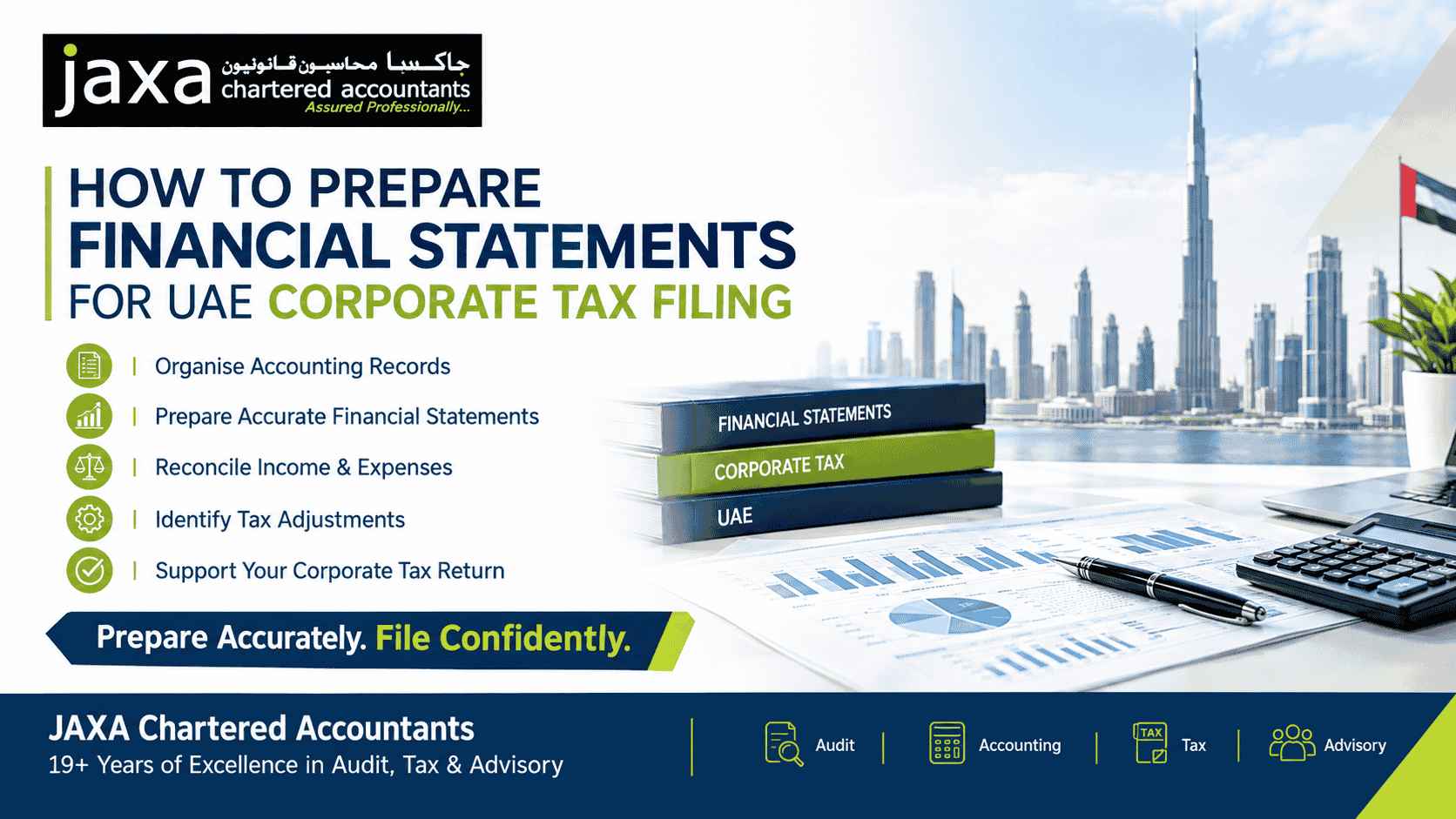

The introduction of UAE Corporate Tax has made accurate financial reporting an important compliance requirement for businesses in the UAE. Preparing financial statements plays a crucial role in the UAE Corporate Tax filing process. Businesses subject to UAE Corporate Tax are expected to maintain appropriate accounting records and maintain accurate financial records to support taxable income calculations and meet corporate tax return and overall tax compliance.
Well-prepared financial statements support accurate corporate tax calculations and provide an audit trail for information reported to the FTA. Businesses should therefore ensure that their accounting records are complete, accurate, and supported by appropriate documentation. Incomplete or weak documentation can lead to errors in taxable income and potential non-compliance.
This is important for mainland companies, Free Zone entities, and UAE branches of foreign companies; navigating how to prepare complete and reliable financial statements can help ensure that UAE corporate tax filings are accurate and properly documented.
Understanding Financial Statements in the UAE
Financial Statements are a structured and reliable summary of a business’s financial position and performance and serve as an important source of financial information for corporate tax calculation and reporting. They provide a clear view of the company’s income, expenses, assets, liabilities, and equity.
In the UAE, businesses are expected to maintain accurate records and prepare financial statements in accordance with International Financial Reporting Standards (IFRS). Well-prepared financial statements help business owners evaluate performance, make informed decisions, and maintain reliable records for UAE corporate tax compliance.
To ensure accuracy and compliance, businesses can use professional financial statement preparation services in Dubai and across the UAE, such as Jaxa Auditors. Our Qualified accounting professionals can assist with preparing, reviewing, and presenting financial statements based on the business activities and applicable reporting requirements.
Role of Preparing Financial Statements in UAE Corporate Tax
Accurate financial statements play a crucial role in determining a business’s UAE Corporate Tax position. They provide the financial information required to assess the company’s accounting profit and make tax adjustments in accordance with applicable UAE corporate tax rules
Financial statements help businesses determine:
- Accounting profit generated during the financial year.
- Taxable income after applicable adjustment
- Allowable and non-allowable expenses
- Tax adjustments required under UAE Corporate Tax rules
- Corporate tax liability payable to the UAE Federal Tax Authority
Accurate financial statements, backed by complete accounting records and supporting documents, help businesses report corporate tax correctly and maintain compliance. So, keeping records updated throughout the year helps to support corporate tax filings, minimize errors, and stay compliant with UAE tax requirements.
Importance of Preparing Financial Statements in UAE Corporate Tax
Financial statements form an important part of the UAE Corporate tax reporting process. They give businesses a clear record of their financial results and provide the basis for making the tax adjustments needed to calculate taxable income.
Properly prepared financial statements can help businesses:
- Calculate taxable income accurately
- Substantiate business expenses and deductions
- Maintain reliable tax records
- Reduce errors when preparing corporate tax returns
- Provide supporting information during FTA reviews
- Improve financial planning and decision-making
Accurate and up-to-date financial records help businesses meet corporate tax obligations while reducing the risk of compliance issues and unnecessary administrative work.
What makes Financial Statement Preparation in the UAE Effective?
Effective financial statement preparation combines accurate bookkeeping, proper reconciliation standards, and timely review. A structured approach ensures that financial information is complete, reliable, and ready for tax and regulatory changes.
- Keep Records Complete and Up to Date
Maintain accurate records of income, expenses, assets, liabilities, and transactions, supported by relevant documentation.
- Apply the Appropriate Accounting Standards
Prepare financial statements using the accounting framework applicable to the business, ensuring consistency and transparency in financial reporting.
- Reconcile before Finalizing: Periodically reconcile bank accounts, receivables, payables, and ledger balances to identify discrepancies and correct them before reporting.
- Review for Accuracy: Check financial data, account balances and supporting documents to identify errors, unusual transactions or missing information.
- Present information clearly: Present a consistent and appropriate financial reporting format so that management, stakeholders or other business owners can easily understand the company’s financial position and performance.
- Prepare in time for tax and compliance: Timely preparation of financial statements gives businesses an opportunity to verify their account and address any tax or compliance risk without last-minute pressure.
Key financial statements for UAE Corporate tax reporting
A complete set of financial statements presents a structured view of a business’s financial activities and position. The key components include:
- Statement of Profit or Loss: The Statement of Profit or Loss summarizes the company’s income and expenses for the financial reporting period. It mainly covers revenue, cost of sales, operating expenses, finance cost, and other income, resulting in the accounting profit or loss.
The figure generally forms the starting point for determining taxable income, subject to the adjustments required under the UAE Corporate Tax.
- Balance Sheet: The Balance Sheet, also known as the Statement of Financial Position, provides a snapshot of the company’s assets, liabilities, and equity at the reporting date.
It includes:
- Cash and bank balances
- Trade receivable
- Inventory
- Investment
- Loans and other liabilities
- Share capital and retained earnings
- Statement of Cash Flow: The Statement of Cash Flows explains changes in the company’s cash and cash equivalents during the reporting period. While corporate tax calculations are based on accounting results rather than cash movements, cash flow information provides insights into liquidity and supports the overall financial reporting process.
- Notes to the Financial Statements: Provide additional context for the figures reported in the financial statements, including accounting policies, depreciation, related-party transactions, and significant provisions or commitments.
Together, these components provide a structured and transparent view of the business’s financial affairs and support corporate tax calculation and reporting.
Accounting Framework for Financial Reporting in the UAE
Financial statements should be prepared with an appropriate accounting framework applicable to their business and reporting requirements.
IFRS is commonly used by UAE entities, while eligible businesses may use IFRS for SMEs where applicable.
Using an appropriate reporting framework helps ensure that financial records are accurate and transparent while providing a dependable basis for financial reporting, tax calculations, and UAE corporate tax compliance.
Common Financial Reporting Errors in the UAE to Watch For
Small accounting errors can have a significant impact on financial reporting and corporate tax calculations. Before finalizing the accounts, businesses should check for:
- Unrecorded sales or income
- Missing purchase invoices and receipts
- Incorrect expense treatment
- Unreconciled bank transactions
- Duplicate accounting entries
- Incorrect asset balance or depreciation
- Incomplete supporting documentations
- Records that have not properly maintained or updated
A thorough review before finalization helps ensure that the financial statements are complete, accurate and properly supported.
Record Retention requirement for Preparing Financial Statements in UAE
Proper record retention is an essential part of financial statement preparation and UAE Corporate tax compliance. Businesses should maintain their accounting records, financial statements, and supporting documents for at least seven years after the end of the relevant tax period, as required under UAE corporate tax legislation.
This includes documents such as invoices, accounting records, and other records supporting the figures reported in the financial statements and UAE Corporate Tax return.
Maintaining complete and accessible records helps businesses substantiate their financial information and respond effectively to any FTA audit, request, or review.
Information and records required for Financial Statement Preparation in the UAE
Accurate financial statements depend on complete accounting records and
Appropriate supporting documentation. Before finalizing the accounts, businesses should ensure that relevant financial information for the reporting period has been collected and properly recorded.
Depending on the nature of the business, this may include:
- Sales invoices and credit notes
- Purchase invoices and supplier records
- Bank statements and reconciliation records
- Payroll and employee records
- Fixed asset register and supporting purchase documents
- Inventory records and stock count records
- Expense claims, receipts, and other supporting documentation
- Loan agreements and financial records
- VAT return and related tax records.
The documents required for financial statements preparation in the UAE may vary based on the company’s activities, accounting framework, and reporting obligations. Keeping accounting records complete, organized, and reconciled makes corporate tax filing and financial statement preparation in Dubai more efficient and reliable.
Why choose Jaxa Auditors for Preparing Financial Statements in the UAE?
Maintaining accurate financial statements in an organized manner can be challenging, but partnering with a best tax agent in the UAE such as Jaxa Auditors can make it easier. Engaging with Jaxa Chartered Accountants, an expert auditing and accounting service in Dubai as well as a certified FTA tax agent in the UAE, ensures that your financial statement preparation in the UAE is accurate, compliant, and submitted on time.
At Jaxa Auditors, we provide professional accounting, financial statement preparation, and tax support in the UAE, helping businesses maintain accurate financial records and meet their UAE Corporate tax and VAT compliance requirements.
Our team can assist with:
- Accounting and Bookkeeping in the UAE
- Corporate tax Registration in the UAE
- Corporate tax return filing in the UAE
- VAT registration in the UAE
- VAT return filing in the UAE
- Financial Statement Preparation in the UAE
- VAT compliance in the UAE
As an FTA-approved tax agent in the UAE, Jaxa also helps businesses connect their financial reporting with their UAE Corporate tax and VAT compliance requirements.
Prepare your financial statements with Confidence
Reliable financial statements give businesses a clear view of their financial position while supporting UAE Corporate Tax compliance and informed decision-making. Professional financial preparation services in Dubai can help ensure that accounts are accurate, properly supported, and prepared in line with UAE FTA regulations.
With Jaxa Auditors, businesses can access integrated accounting, financial reporting, VAT, and Corporate tax assistance from an experienced team, including 19+ years of experience as a UAE FTA Tax agent in the UAE.
Speak with Jaxa today to discuss your financial statement preparation and accounting requirements.

 Reach us on WhatsApp